


Bangkok Hotel News: In the humid nights of Bangkok, where the Chao Phraya River glimmers under a canopy of high-rises, a parallel world of luxury is thriving far from public view. Ultra-wealthy travelers from China, the Middle East, and across Asia no longer queue to the familiar front desks of five-star hotels. Instead, they slip into unmarked residences booked through private WhatsApp groups, Instagram DMs from trusted fixers, and closed Telegram channels that demand referrals and sometimes even background checks.
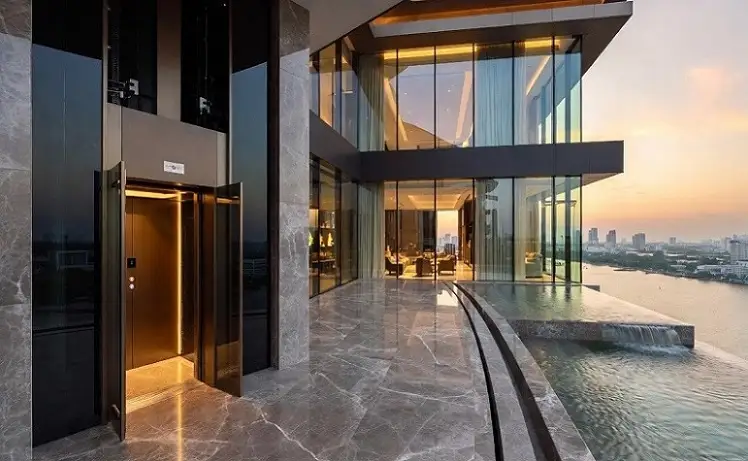
Image Credit: Bangkok Hotel News
These are the city’s invisible hotels—high-end penthouses and villas deliberately kept off every major booking platform.
What started as a quiet workaround during the pandemic years has now become a full-scale preference, and this Bangkok Hotel News report finds the practice accelerating through 2026 as demand for absolute privacy outpaces even the most exclusive branded offerings.
Rates often exceed 150,000 to 300,000 baht a night, yet the properties rarely appear online. Owners and managers prefer the control of personal networks, where guests arrive by private car, ride dedicated elevators, and leave without ever signing a public ledger.
Why Privacy Now Trumps Prestige
The appeal is straightforward. In an age of constant social media and facial recognition cameras, the ultra-rich want stays that feel like borrowing a friend’s empty mansion rather than checking into a hotel. No lobby encounters, no chance of being photographed by influencers, no digital footprint on Agoda or Booking.com.
Staff teams are small and tightly controlled—often a single butler and housekeeper who know only a first name and preferred champagne. Many stays last just one or two nights, enough for a discreet deal, a family gathering, or simply the satisfaction of claiming a sky-high address that remains unknown to the wider public.
Industry insiders who manage these networks say the shift is driven largely by Asian high-net-worth individuals who value discretion above brand names. “They don’t want the world knowing where they slept,” one longtime luxury fixer explained over coffee in Thonglor. “They want silence, space, and zero paper trail and if possible zero digital trail as well.”
Full-Floor Penthouses at SCOPE Thonglor
One of the clearest examples sits right at the entrance to Thonglor. SCOPE Thonglor, Thailand’s first all-penthouse condominium, opened with just 18 residences, each occupying an entire floor. Sizes range from about 415 square metres for the simplex layouts to more than 750 square metres for the triplex versions.
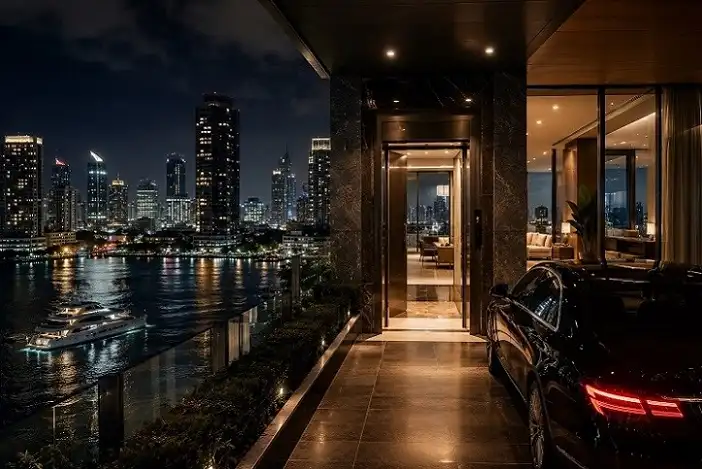
Image Credit: Bangkok Hotel News
Designed by New York architect Thomas Juul-Hansen, the units feature private elevators, floor-to-ceiling glass, and views that stretch across Sukhumvit. Several of these full-floor homes circulate quietly among private channels rather than public listings. Guests step out of their cars into air-conditioned private lifts and never share a corridor with another resident. Nightly rates in this unofficial market have been reported well above 250,000 baht when the units are made available to vetted travelers.
Riverfront Hideaways at Mandarin Oriental Residences
Along the Chao Phraya, The Residences at Mandarin Oriental Bangkok offer another layer of seclusion. The duplex penthouses, some exceeding 700 square metres, come with private pool decks, sweeping river views, and the option of full hotel-level service without the hotel crowds. While the building itself is branded, a number of these top-floor units are held by overseas owners who rent them exclusively through closed networks. Arrivals often happen by private boat or unmarked vehicle. One recent visitor, a mainland Chinese entrepreneur, spent two nights in a Legacy-level penthouse and left with no digital record of the stay beyond a handful of encrypted messages. The combination of riverfront isolation and five-star backup makes these residences particularly popular for short, high-stakes visits.
Sky Mansions and Villas at Four Seasons and Capella
Further along the same stretch of river, Four Seasons Private Residences Bangkok and the neighboring Capella Bangkok add still more options. The Four Seasons tower includes expansive sky mansions that can stretch past 500 square metres, some with multiple levels and panoramic water views. Capella’s actual riverfront villas, complete with private gardens, plunge pools, and salas overlooking the water, are occasionally released into the same private circuits when not occupied by their owners.
These properties sit within the larger Chao Phraya Estate, yet the most exclusive units never surface on public platforms. Guests can request a private chef, a dedicated boat transfer, or simply total silence—all arranged through a single contact rather than a reservations system.
How the Networks Actually Work
Select residences here have been known to circulate among the same WhatsApp groups that handle the SCOPE and riverside properties.
Access begins with trust. A referral from a private banker, a family office, or a previous guest is usually required. Once inside the group, availability is shared with photos, floor plans, and strict rules: no public social media posts that identify the location, cash or cryptocurrency preferred in some cases, and departure by the same discreet means of arrival. Managers of these properties often maintain small teams of multilingual staff who rotate between several units, ensuring that no single residence develops a visible pattern of occupancy.
The practice has quietly reshaped parts of Bangkok’s luxury hospitality scene. Traditional hotels still dominate the broader market, yet the invisible segment is capturing a growing share of the highest-spending visitors. Some branded properties have even begun offering “private residence” packages that mimic the off-platform experience, though pure invisibility remains the ultimate draw.
The trend shows no sign of slowing. As more ultra-luxury towers rise in Thonglor, Silom, and along the river, a portion of their inventory continues to vanish into private channels the moment keys are handed over. For the guests who use them, the arrangement delivers something no conventional hotel can fully guarantee: the feeling of being completely untraceable in one of Asia’s most watched cities.
Bangkok’s hospitality landscape is evolving in real time, and the most exclusive addresses are the ones that never appear on a screen. The preference for these hidden stays continues to grow among those who can afford absolute privacy, reshaping how the city’s top-tier visitors choose to experience the capital while leaving traditional booking platforms further behind with each passing season.
For the latest on new private elite stays in Bangkok, keep on logging to Bangkok Hotel News.