


Thailand’s hospitality technology sector is witnessing a new development as Bangkok-based artificial intelligence research company AIORG introduces affordable AI Voice Agents for Hotels, targeting independent properties, boutique hotels, smaller hotel chains, and hotel restaurants. The technology promises to transform how hospitality businesses manage guest inquiries, room reservations, restaurant bookings, housekeeping requests, and everyday administrative operations without requiring the substantial technology budgets traditionally associated with major international hotel groups

Image Credit: AIORG
As hotels face rising operating expenses, staffing pressures, and growing expectations for immediate guest assistance, intelligent automation is becoming increasingly relevant. Against this backdrop, this Bangkok Hotel Technology News report examines how AIORG’s conversational voice technology, developed under the leadership of AI researcher and entrepreneur Alex Montoya, could provide smaller hospitality operators with capabilities previously associated with larger hotel corporations. The company’s approach emphasizes affordability, multilingual communication, straightforward deployment, and practical integration with existing hotel operations.
AI Voice Agents Designed Specifically for Hospitality Operations
Unlike conventional automated telephone systems that direct callers through rigid menus, AIORG’s voice agents are designed to engage guests in natural, humanlike conversations. The technology can interpret questions, request clarification, provide relevant information, and guide callers toward appropriate hotel services.
A prospective guest asking about room availability, for example, could receive information about accommodation categories, facilities, promotional packages, and reservation procedures. Depending on the property’s configuration and connected booking systems, the agent could also assist with reservations, confirmation messages, and follow-up communications.
The technology extends beyond front-desk activities. Hotels can configure agents to support restaurant reservations, spa appointments, housekeeping requests, billing inquiries, guest reminders, and selected food and beverage operations.
AIORG also envisions customized applications involving security-related communications, customer relationship management, and revenue optimization, although these functions require suitable integrations and clearly defined operational safeguards.
Turning Existing Hotel Websites into Intelligent Knowledge Bases
One of AIORG’s most practical features is its ability to build customized knowledge bases using information already published on hotel websites.
Instead of requiring employees to manually prepare extensive databases, the platform can extract publicly available information concerning room categories, facilities, restaurant services, promotional packages, operating hours, and hotel policies.
According to AIORG, the initial knowledge-base setup can take only a few minutes, although complete deployment may require additional configuration, testing, and integration.
Once configured, the agent can answer questions using property-specific information rather than relying entirely on generic responses.
This distinction is particularly valuable for boutique hotels, where distinctive experiences, personalized services, and individual property characteristics frequently influence booking decisions.
A multilingual agent could also help properties communicate with international travelers in their preferred languages, with supported language capabilities determined by each hotel’s requirements.
Supporting Reservations, Revenue Growth, and Guest Satisfaction
AIORG’s technology is intended to help hotels capture inquiries that might otherwise go unanswered during busy periods or outside normal administrative hours.
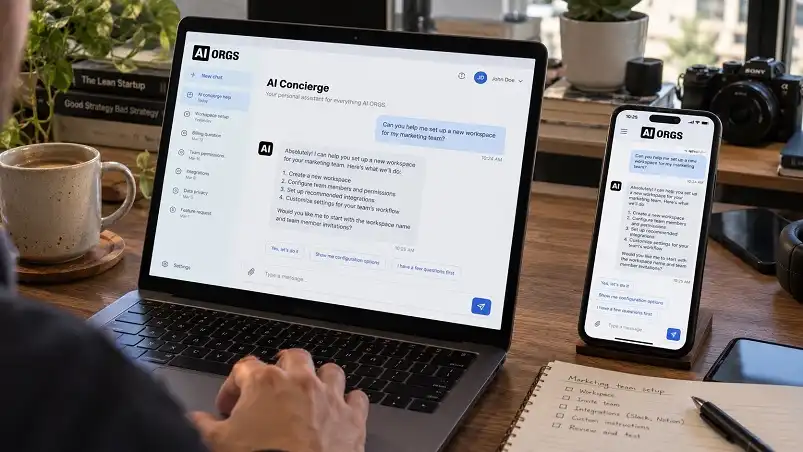
Image Credit: Bangkok Hotel News
For smaller properties operating with limited reception teams, missed telephone calls can represent lost booking opportunities.
An always-available conversational agent could assist prospective guests while employees attend to arrivals, departures, and other responsibilities.
The platform can also identify relevant opportunities to recommend room upgrades, dining experiences, spa treatments, and promotional packages.
Such recommendations would ideally reflect guests’ expressed preferences rather than aggressive selling techniques.
More advanced configurations may connect with customer relationship management systems to support guest histories, previous expenditures, booking patterns, and personalized follow-up communications.
These capabilities could eventually help hotel operators identify recurring customer preferences and improve service planning, provided that guest information is handled appropriately.
Affordable Pricing Targets Independent Hotel Operators
Affordability is central to AIORG’s commercial strategy. The company says introductory promotional packages, available until the end of 2026, begin at US$700, excluding installation.
Hotels possessing their own web development capabilities may undertake installation independently, while AIORG offers installation assistance for a stated US$300 fee.
Within predetermined usage allowances, supporting AI computing services are offered free for the first two months.
Subsequent estimated computing expenses range between US$100 and US$250 monthly, depending on usage and system requirements.
Additional customization, specialized integrations, and expanded functionality may involve separate development charges.
For smaller hospitality businesses, this pricing model could represent a more accessible entry point than extensive enterprise automation projects.
However, prospective customers should evaluate total operating expenses, integration requirements, usage limitations, and ongoing support arrangements before committing.
Alex Montoya Brings International Experience to Hospitality AI
Behind AIORG’s hospitality initiative is Alex Montoya, its Bangkok-based Chief AI Research Officer and an entrepreneur whose professional experience spans tourism, luxury services, customer experience, business strategy, and artificial intelligence research.
A Colombian-born French national, Montoya studied at Universidad EAFIT in Colombia before earning an MBA from GLOBIS University Graduate School of Management in Japan.
His international background helped shape an interest in how emerging technologies influence business competitiveness, service quality, and consumer behavior.
Montoya established SAHED Co., Ltd. in Bangkok in 2018 and has increasingly focused on making advanced AI applications commercially accessible to smaller enterprises.
Through AIORG and partnerships with specialist technology providers, his approach involves adapting sophisticated conversational systems to practical business requirements rather than expecting smaller companies to develop complex AI infrastructure independently.
Montoya has also advocated stronger Thai-language representation in advanced AI testing since 2020, recognizing the importance of linguistic accessibility for Thailand’s domestic business community.
His AI4EM, or AI for Elite Minds, framework emphasizes creativity, critical thinking, responsible judgment, and effective collaboration between people and intelligent systems.
Privacy, Security, and Human Oversight Remain Essential
Despite the potential advantages, deploying AI Voice Agents for Hotels introduces important operational responsibilities.
AIORG says its development approach considers Thailand’s Personal Data Protection Act, particularly where systems interact with guest records and customer management infrastructure.
Hotels must nevertheless establish appropriate safeguards covering personal information, access permissions, data retention, consent, and cybersecurity.
Voice agents handling payment-related inquiries should also operate within secure, appropriately authorized systems.
Human oversight remains essential when guests raise complaints, report emergencies, dispute charges, or require sensitive assistance.
Importantly, adopting an AI platform does not automatically establish regulatory compliance. Individual hotels remain responsible for evaluating their deployments and ensuring that automated responses are accurate, secure, and appropriate.
Growing Adoption Across Thailand and Regional Markets
According to AIORG, more than 217 hotels across Thailand are already using its AI voice-agent technology.
The company also reports growing adoption in Vietnam, Malaysia, Indonesia, Australia, New Zealand, and Hong Kong.
These adoption figures are company-reported and have not been independently verified.
AIORG is planning a broader commercial launch across Europe and North and South America in February 2027.
The expansion reflects increasing interest in hospitality automation among businesses seeking scalable technology without building substantial internal development teams.
For hotel owners evaluating these systems, measurable improvements in response times, booking conversions, employee productivity, and guest satisfaction will ultimately determine their commercial value.
A New Direction for Independent Hotel Technology
AIORG’s introduction of economically priced conversational agents highlights an important shift in hospitality technology accessibility. Smaller hotels may increasingly obtain sophisticated automation capabilities without surrendering the personalized service that distinguishes independent properties. Nevertheless, long-term success will depend on dependable performance, transparent costs, effective system integration, responsible data management, and maintaining meaningful human involvement throughout the guest experience.
Hotels seeking further information about AIORG’s hospitality voice-agent solutions can email aiorgsvip@gmail.com or visit https://ai-orgs.vip/