


Waldorf Astoria Bangkok is taking another significant step into the digital era of luxury hospitality with the introduction of IRIS technology across all 171 guestrooms, giving visitors mobile access to in-room dining, hotel information, concierge services, spa details, and local recommendations. The Hilton-approved platform is designed to bring greater convenience to guests without diminishing the highly personalized service for which the Waldorf Astoria brand is known.
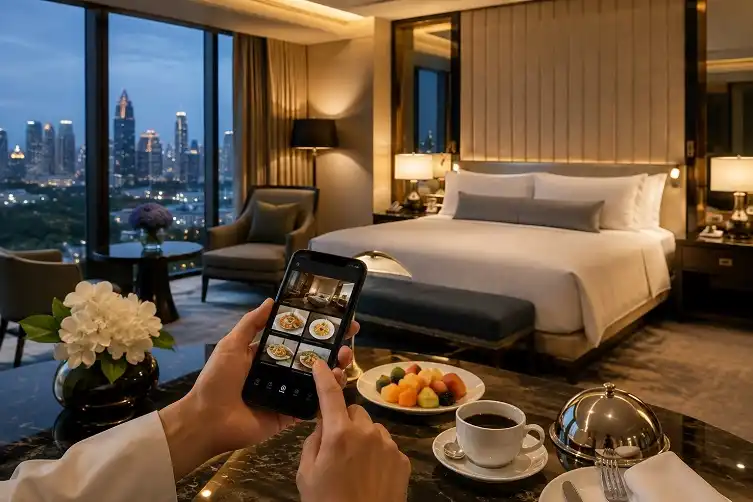
Image Credit: Bangkok Hotel News
The new system combines the IRIS Digital Guest Directory with Mobile Ordering, creating a branded digital environment that guests can access directly from their own smartphones without having to download a dedicated application. As luxury hotels increasingly look for technology that removes friction rather than adding another layer of complexity, this Bangkok Hotel Technology News report highlights how the Bangkok property is using digital services to make everyday interactions faster while allowing hotel employees to devote more attention to personal engagement.
Digital Convenience Meets Bangkok Luxury
Located in Bangkok’s prestigious Ratchaprasong district, Waldorf Astoria Bangkok has established itself as one of the Thai capital’s prominent luxury hotels, combining contemporary design, upscale dining, and highly personalized hospitality.
Its latest technology deployment is intended to extend that experience into the digital guest journey.
Rather than relying exclusively on printed room service menus, traditional guest directories, or telephone calls for information, guests can scan discreet QR codes positioned inside their rooms. From there, they can browse hotel facilities and services, look at dining options, access concierge information, discover nearby attractions, and place in-room dining orders.
The digital platform is also being introduced to guests during check-in and through pre-arrival communications. That approach means visitors can become familiar with relevant hotel information and available services before or during their stay rather than having to search for details once they need them.
For a luxury property, that seemingly simple change can be important. Convenience increasingly forms part of the overall perception of service, particularly among travelers who are accustomed to using their phones for restaurant reservations, transportation, airline check-ins, payments, and other everyday transactions.
Technology Designed to Support Personal Service
Waldorf Astoria Bangkok says the objective is not to replace traditional luxury hospitality with screens and automated interactions.
Instead, the technology is being positioned as another service channel, giving guests the ability to choose how they interact with the hotel.
Paweena Waraha, Hotel Manager at Waldorf Astoria Bangkok, said luxury hospitality is centered on anticipating guest needs and delivering thoughtful, personalized service throughout a stay.
She noted that today’s travelers increasingly appreciate being able to access important information and services from their own devices. IRIS gives them that flexibility while allowing the hotel to maintain the level of personal attention expected from Waldorf Astoria.
The distinction is particularly relevant in the luxury segment, where excessive automation can sometimes appear inconsistent with the expectation of attentive human service.
For Waldorf Astoria Bangkok, the strategy is therefore not simply about digitization. It is about using technology for routine transactions while giving hotel employees more opportunities to concentrate on the interactions where personal attention provides greater value.
Waraha emphasized that technology should complement personal service rather than replace it. By making routine information and ordering available digitally, the system can provide guests with additional choice while freeing employees to focus on more meaningful interactions.
Goodbye to the Traditional Printed Hotel Directory
One of the more practical changes is the replacement of traditional printed guest directories and room service menus.
Although printed directories have been a familiar feature of hotel rooms for decades, maintaining them presents operational challenges. Restaurant hours can change, spa treatments can be updated, promotions come and go, and local recommendations can quickly become outdated.
A printed document cannot be altered without producing new material.
A digital guest directory, by comparison, can be updated in minutes. This gives the hotel greater control over the accuracy and timeliness of the information presented to guests.
The transition also supports the property’s sustainability objectives by reducing its reliance on repeatedly printing menus, directories, and other informational material.
For hotels operating hundreds of guestrooms, even relatively small reductions in printed material can become meaningful over time, particularly when menus and information guides require regular revisions.
A More Visual In-Room Dining Experience
The IRIS Mobile Ordering system brings perhaps the most noticeable change to the guest experience.
Instead of picking up a telephone and ordering from a conventional menu, guests can browse a visually rich digital selection on their mobile devices. Menus can include food photography, descriptions, ingredient information, allergen details, and customization choices.
This gives guests more information before ordering and creates an experience that is closer to the digital ordering environments travelers already encounter outside hotels.
It also provides the property with opportunities to showcase food and beverage options more effectively. High-quality images and detailed descriptions can make dishes easier to understand, particularly for international visitors who may be unfamiliar with certain ingredients or preparations.
Digital menus can also be adjusted much faster than printed alternatives, allowing hotels to respond to product availability, seasonal dishes, special promotions, or operational changes.
Orders Travel Directly to the Hotel’s POS
Behind the guest-facing technology is an important operational integration.
IRIS is integrated with Waldorf Astoria Bangkok’s Oracle MICROS point-of-sale system. Orders submitted through the mobile platform can therefore be transmitted directly to the relevant hotel operation rather than requiring an employee to manually re-enter the order.
Removing that additional step can reduce the possibility of transcription mistakes while helping streamline the ordering process.
For a luxury hotel, where accuracy and timing are critical parts of the dining experience, the operational benefit could be just as important as the convenience offered to guests.
The system also supports breakfast pre-ordering. Guests who know when they want breakfast can schedule it in advance, adding another level of flexibility for travelers with meetings, flights, tours, or other early-morning commitments.
Digital Ordering Could Also Drive F&B Revenue
The technology is not solely about convenience and efficiency. Digital ordering platforms can also become commercial tools for hotels.
Visual menus provide properties with opportunities to highlight additional dishes, drinks, sides, upgrades, and complementary products during the ordering journey. That can potentially increase average order values while keeping more guest food and beverage spending within the hotel.
Marcus Bird, Chief Revenue Officer at IRIS, said Waldorf Astoria Bangkok is recognized for delivering high-end luxury experiences and that the company is pleased to support the property as it develops its digital guest journey.
According to Bird, luxury travelers increasingly expect digital convenience alongside the personal attention associated with an exceptional hotel stay.
He said the IRIS platform has been designed to complement human interaction by providing guests with intuitive access to information and services whenever they choose while enabling hotel employees to focus their time where personal service has the greatest impact.
Bird also pointed to potential operational and commercial advantages. Integration between mobile ordering and a hotel’s POS can reduce manual processes, while digital menus and convenient ordering functions can create opportunities to capture additional food and beverage spending.
From Mobile Ordering to a Digital Concierge
The broader IRIS ecosystem goes beyond room service.
Its Digital Guest Directory is designed as an always-accessible alternative to the traditional printed hotel information book, bringing property information, services, and destination recommendations together on guests’ mobile devices.
Mobile concierge functionality can similarly enable travelers to make requests, obtain information, and explore hotel amenities digitally rather than having to visit or telephone the front desk for every inquiry.
For hotels, the value lies partly in directing straightforward transactions toward digital channels while keeping employees available for requests requiring judgment, local knowledge, problem-solving, or a genuinely personal touch.
That balance is becoming increasingly important as hotels attempt to improve productivity without making luxury hospitality feel impersonal.
Why Bangkok’s Luxury Hotel Technology Race Matters
The Waldorf Astoria Bangkok implementation reflects a broader shift in the luxury hospitality sector.
Hotels are no longer adopting digital technology simply because guests expect Wi-Fi, mobile websites, and online reservations. Technology is increasingly being integrated directly into the stay itself, from pre-arrival communication and digital directories to mobile ordering and service requests.
Bangkok represents a particularly interesting market for this evolution because the city combines an extensive luxury hotel sector with intense competition among established international brands and new high-end properties.
In that environment, impressive guestrooms, restaurants, spas, and public spaces remain essential, but hotels are also competing over the ease and efficiency of the complete guest journey.
The strongest technology strategies may ultimately be those that guests barely notice.
A guest does not necessarily need to understand the software integration behind an in-room dining order. What matters is that the menu is easy to navigate, the information is accurate, the order reaches the right team, and the requested food arrives as expected.
At the same time, guests who prefer traditional service still expect to be able to speak with knowledgeable hotel employees.
That combination of digital choice and human hospitality is likely to become an increasingly important marker of contemporary luxury.
A Digital Upgrade with a Human Purpose
Waldorf Astoria Bangkok’s adoption of IRIS demonstrates how luxury hotels are attempting to modernize without abandoning the personal service that defines the upper end of hospitality. The most significant aspect of the deployment may not be the QR codes, digital menus, or even the direct POS integration, but how those technologies reshape the use of employees’ time.
If routine questions, menu browsing, and straightforward orders can be handled more efficiently through a guest’s own device, hotel teams have greater scope to concentrate on complex requests, personalized recommendations, and memorable face-to-face interactions.
For guests, meanwhile, the appeal is choice. Someone who wants to order breakfast from a phone can do so, while another traveler can continue interacting directly with the hotel team.
As Bangkok’s luxury hotel market continues to evolve, that combination of digital convenience, operational efficiency, sustainability, and personal service could prove increasingly influential. Waldorf Astoria Bangkok’s latest move illustrates a hospitality model in which technology works most effectively when it stays in the background, simplifies the practical parts of a hotel stay, and gives employees more opportunities to deliver the distinctly human experiences that luxury travelers continue to value.
For more details on the IRIS Luxury Guest Tech, visit:
For more on Waldorf Astoria Bangkok, visit:
https://www.hilton.com/en/hotels/bkkwawa-waldorf-astoria-bangkok