


Hotel Revenue Squeeze Spreads Beyond Rooms
Bangkok hotels are facing pressure on income from restaurants, bars, banquets, meeting facilities, and spas, with earlier industry reports describing reduced spending by diners, corporate clients, and travelers. The slowdown is putting additional strain on full-service properties that depend on these businesses to supplement room revenue and cover substantial operating expenses.
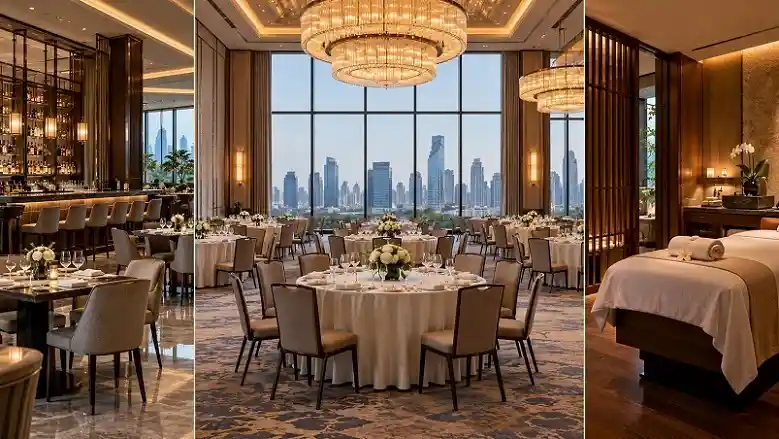
Image Credit: Bangkok Hotel News
The difficulties come as competition makes it harder for hotels to maintain prices, even when guest traffic improves. Bangkok’s latest market figures show that fuller rooms are not automatically producing stronger returns, and this Bangkok Hotel News report highlights the mounting importance of spending beyond accommodation. For properties experiencing weaker restaurant sales and fewer lucrative functions, maintaining occupancy offers only partial relief.
Restaurants and Bars Lose Spending Power
Hotel data reported in June that industry estimates placed food and beverage revenue declines at between 25% and 40% at some hotels compared with the same period a year earlier. The reported reductions applied to affected properties rather than a verified average covering the entire capital.
Hotel executives cited in that reporting described customers choosing standalone restaurants, neighborhood eateries, shopping mall dining outlets, and delivery services. Families facing tighter household budgets were cutting dining expenses, while rooftop venues were experiencing lower spending per customer despite continuing to attract visitors.
For hotel restaurants, weaker spending creates pressure on both sales and operating margins. Kitchens, service teams, and dining spaces still require resources, making a sustained reduction in customers especially difficult for properties with several outlets.
Banquet and Meeting Business Comes Under Pressure
Corporate events are another concern. Earlier reporting described companies seeking shorter meetings, smaller attendance numbers, and reduced catering requirements. Some businesses were postponing functions or selecting less expensive venues as they tightened budgets. Meeting and event revenue reportedly dropped by as much as 47% at certain properties.
A smaller function can affect several hotel departments at once. Fewer participants mean fewer meals and refreshments, while a shorter program can reduce the need for overnight accommodation. Consequently, securing a booking does not necessarily replace the revenue previously generated by a larger conference or banquet.
Spas Also Feel Softer Demand
July reporting identified hotel spas and wellness centers among the facilities experiencing softer demand as leisure travelers and corporate customers reduced discretionary spending. Operators were responding to broader financial pressure through tighter cost controls, including restricted facility hours and postponed refurbishment work.
No reliable citywide percentage decline for hotel spa revenue was available in the reviewed reporting. Nevertheless, the inclusion of wellness facilities among the affected businesses underscores the challenges facing properties that rely on premium services to increase spending per guest.
Higher Occupancy Fails to Lift Room Returns
Knight Frank Thailand reported that Bangkok hotel occupancy averaged 76.2% in the first half of 2026, up 1.1 percentage points year over year. Average daily rates nevertheless fell 2.1%, pushing revenue per available room down 0.6%. The consultancy also identified rising energy, wage, distribution, and customer acquisition costs as pressures on profitability.
Performance remains uneven. BEYOND reported an 8% year-over-year increase in food, beverage, and banquet revenue across its two-property hotel business in the second quarter, showing that some operators continued to secure growth despite challenging conditions.
Pressure Builds on Full-Service Properties
For Bangkok hotels experiencing declines across several departments, the challenge now extends well beyond filling bedrooms. Restaurant customers, event organizers, and spa guests remain essential to overall earnings, while rising expenses leave operators with less room to absorb prolonged weakness in these important sources of income.