


Thousands of Hotel Restaurants Competing for Bangkok’s Diners
Unknown to many diners, Bangkok has an enormous hotel food-and-beverage industry operating behind the doors of its hotels and serviced apartments.
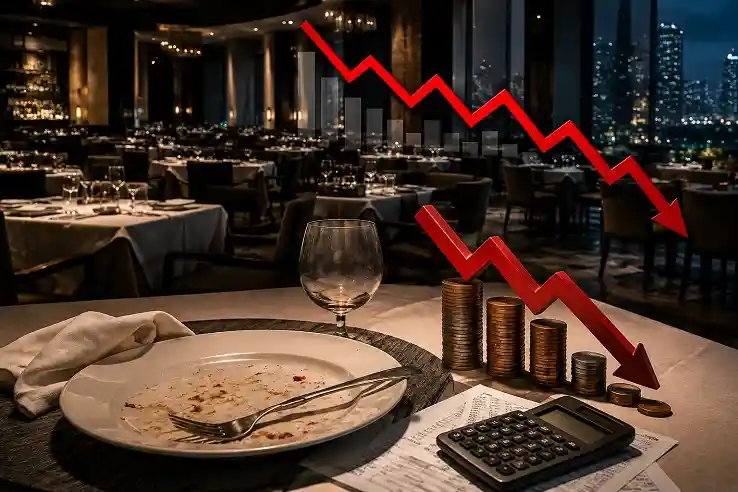
Image Credit: Bangkok Hotel News
Based on newly compiled databases, there are approximately 4,475 restaurants, bars, lounges, cafés and other dining outlets across 1,318 licensed hotels and serviced apartments, comprising around 156,402 room keys. (Our figures are higher than conventional hotel-only counts because they also include registered serviced apartments managed by notable hospitality groups.)
Almost every full-service hotel operates at least one food-and-beverage outlet, while larger luxury properties can maintain extensive collections of restaurants and bars. However, behind the glamorous dining rooms and expensive kitchens lies a troubling commercial reality. Based on feedback gathered from dining operations at 100 hotels across Sukhumvit, Ploenchit, Ratchadamri, Rama I, Sathorn, Silom and Charoen Krung, 73% of the outlets surveyed were reportedly either operating at a loss or barely breaking even. Based on broader industry feedback, this news report estimates that almost 64% of Bangkok’s hotel dining outlets could currently be loss-making. These percentages are proprietary Bangkok Hotel News estimates based on industry feedback and our survey, rather than independently audited financial results.
Thailand Has More Than 690,000 F&B Establishments
The scale of competition becomes clearer when Bangkok’s hotel restaurants are viewed against Thailand’s overall dining industry.
On 23 May 2025, Kasikorn Research Center revised its forecast for Thailand’s food-and-beverage restaurant business to THB646 billion for 2025, representing growth of only 2.8% over 2024. This was a significant downward revision from its December 2024 forecast of THB657 billion and 4.6% growth.
KResearch estimated that the restaurant segment alone would be worth approximately THB562 billion in 2025, growing 3%, while beverages, bakeries and ice-cream shops were forecast at approximately THB84.2 billion, growing 1.9%.
More importantly for hotel operators, KResearch estimated that Thailand would have more than 690,000 food-and-beverage restaurant establishments nationwide in 2025. That figure does not even include numerous other operations such as street-food stalls, food trucks and ghost kitchens.
The competitive pressure is particularly relevant in Bangkok. KResearch noted that investment remained concentrated in the Bangkok Metropolitan Area and, citing LINE MAN Wongnai data, said newly opened restaurants in Bangkok increased 4.8% during the first three months of 2025 compared with the end of 2024.
In the first six months of 2026, industry experts estimated that the number of new restaurants increased by 2.9% compared to the whole of 2025.
Some Bangkok Hotels Are Operating Large Restaurant Portfolios
The sheer number of restaurants contained within some of Bangkok’s major hotels demonstrates how intensely competitive the hotel dining market has become.
Mandarin Oriental, Bangkok promotes a substantial collection of restaurants and bars spanning fine dining, Thai, Chinese and international concepts. The Athenee Hotel, Bangkok similarly operates multiple distinctive restaurants, while Anantara Siam Bangkok Hotel and Centara Grand at CentralWorld maintain extensive food-and-beverage portfolios. In total it has 12 outlets.
Bangkok Marriott Marquis Queen’s Park is another major F&B player. Marriott’s current official website identifies seven on-property dining options, including Goji Kitchen + Bar, Pagoda Chinese Restaurant, The Siam Tea Room, Akira Back, ABar Rooftop, Teeshot Bar and The Lobby Lounge.
Multiply such operations across hundreds of hotels and it becomes obvious why Bangkok’s hotel dining business represents an enormous industry in its own right.
The Economic Environment Is Making Matters Worse
Hotel restaurants are not operating in an easy environment. KResearch warned in May 2025 that Thailand’s economic slowdown was affecting consumer purchasing power and spending on restaurants. It also identified intense competition, rapidly changing consumer behavior, volatile ingredient costs and limited opportunities for operators to increase prices as factors weighing on revenue and profitability.
Costs remain particularly challenging. KResearch estimated food raw materials account for approximately 35% of total operating costs, labor around 15%, while utilities and rental expenses together represent more than 20%.
Things have got worse since the Middle-east war are started by America and fuel prices have gone up along with a global economic slowdown. The Airlines and global travel and tourism industry has also been affected.
Hotel restaurants can face additional cost pressures because they frequently operate to international hospitality standards involving larger staffing structures, expensive equipment, premium imported ingredients and substantial overheads.
Is Poor Marketing Part of the Problem?
Our survey also revealed another uncomfortable issue: some hotels may be contributing to their own difficulties through unimaginative restaurant marketing.
Many properties continue depending on stereotypical promotions—seafood buffets, afternoon teas, Sunday brunches, seasonal menus and repetitive discounts—supported by occasional Facebook and Instagram posts.
Digital marketing itself is not the problem. The problem is doing exactly what hundreds of competing restaurants are already doing.
Consumers are constantly exposed to restaurant advertising across Facebook, Instagram, YouTube, TikTok and other platforms. Another photograph or video of a buffet accompanied by a discount percentage can simply disappear into an ocean of similar content.
Hotel marketing teams need to ask a much more fundamental question: Why should somebody living in Bangkok specifically choose this restaurant tonight?
Loyalty Programmes Are Useful, But They Cannot Do Everything
Major hotel groups have powerful loyalty ecosystems, including Marriott Bonvoy, Hilton Honors, World of Hyatt, IHG One Rewards, ALL Accor and GHA DISCOVERY.
Such programmes undoubtedly help drive restaurant traffic, particularly through member discounts and dining privileges. But relying excessively on loyalty members creates another potential weakness.
KResearch’s research highlights low brand loyalty among consumers and identifies novelty, experience, quality, health and reasonable pricing as five increasingly important considerations influencing dining decisions. Most consumers these days are no longer brand loyal but expect value for money deals and attractive offers.
That finding should concern hotel marketers. Modern Bangkok diners can compare menus, prices, photographs, reviews and promotions within minutes. They may belong to several loyalty programmes simultaneously while choosing whichever restaurant offers the most attractive experience at that particular moment.
AI will not make recommendations unless it has collated data from third party sources including media and PR write-ups (not sponsored or branded content), reviews and recommendations.
Hotel Restaurants Must Become Brands of Their Own
Hotel restaurants increasingly need to behave like independent restaurant brands rather than simply food-and-beverage facilities inside hotels.
That means creating recognizable chef personalities, original culinary events, collaborations, limited-seat experiences, neighborhood partnerships and targeted campaigns aimed specifically at Bangkok residents.
Hotels should also measure restaurant marketing more intelligently. Management needs to understand customer-acquisition costs, repeat visits, average spending, campaign conversion and whether promotions actually generate incremental revenue.
Discounting a THB2,000 meal to a customer who would have purchased it anyway is not necessarily successful marketing.
An Expensive Problem — But also a Major Opportunity
Bangkok’s hotel dining industry is too large, sophisticated and capital-intensive to tolerate persistent losses indefinitely. If the patterns identified in our survey broadly reflect conditions across the market, thousands of hotel restaurants, bars and lounges are fighting for customers in one of Asia’s most competitive dining environments. Yet the opportunity remains enormous. Hotels already possess talented chefs, impressive kitchens, purchasing infrastructure, attractive locations and substantial marketing resources. Those that stop treating restaurants merely as hotel amenities and instead build distinctive, independently desirable dining brands could transform underperforming outlets into profitable destinations.
Bangkok certainly does not lack restaurants; what many hotel dining outlets desperately need is stronger differentiation, more imaginative marketing and compelling reasons for customers to return.
If hotels are seeking new creative and marketing solutions that actually work, contact Digital Emeralds, the owning company of Bangkok Hotels News and more than 1740 news website for more details via mktwiz789@gmail.com. Companies seeking to buy the recently compiled database of hotel restaurants along with lots of critical data linked to the database, can also contact us.