


Key points
- Bangkok’s hotel industry is facing what many operators are describing as the most severe downturn in food and beverage and meeting room revenues since the dark days of the COVID-19 pandemic.
- According to several hotel industry estimates, revenue generated from food and beverage outlets at many Bangkok hotels has declined between 25 and 40 percent compared to the same period last year, while meeting and event-related income has dropped by as much as 47 percent at some properties.
- A hotel sales director at a prominent Bangkok property noted that companies which previously organized full-day events with catering and accommodation packages are now seeking shorter meetings, fewer participants, and significantly reduced food and beverage requirements.
Bangkok Hotel News: Bangkok’s hotel industry is facing what many operators are describing as the most severe downturn in food and beverage and meeting room revenues since the dark days of the COVID-19 pandemic. While hotel occupancy levels across the Thai capital are also slightly decreasing, a growing number of hotels are reporting alarming declines in spending at restaurants, bars, lounges, banquet halls, and meeting facilities.
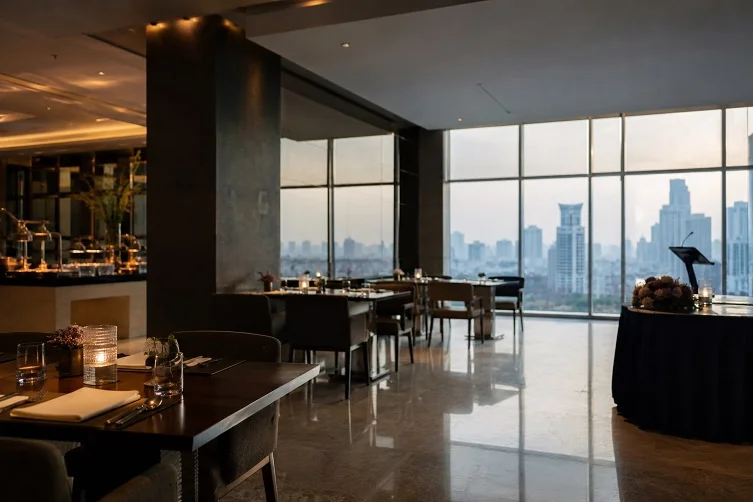
Image Credit: Bangkok Hotel News
Industry executives say the situation has deteriorated significantly over the last six months as a combination of international and domestic economic pressures continues to reshape consumer behavior. Rising fuel prices triggered by escalating tensions in the Middle East, slowing global economic growth, and Thailand’s worsening household debt crisis have all contributed to a noticeable reduction in discretionary spending. According to several hotel industry estimates, revenue generated from food and beverage outlets at many Bangkok hotels has declined between 25 and 40 percent compared to the same period last year, while meeting and event-related income has dropped by as much as 47 percent at some properties. Midway through these challenging developments, this Bangkok Hotel News report found that many hotel operators are becoming increasingly concerned about the second half of the year as forward bookings for corporate events and social functions continue to soften.
Restaurants and Bars Feeling the Pressure
For decades, food and beverage operations have represented one of the most important revenue streams for Bangkok Hotels. Industry data suggests that F&B activities typically contribute around 40 percent of total hotel revenue, particularly among upscale and luxury properties where restaurants, bars, rooftop venues, and catering services play a significant role in profitability. However, consumers are increasingly choosing less expensive alternatives.
Hotel executives across Sukhumvit, Silom, Sathorn, Riverside, and Ratchadaphisek districts report that customers who once frequented hotel restaurants several times each month are now opting for standalone restaurants, neighborhood eateries, shopping mall dining outlets, or food delivery services. Many middle-income families have significantly reduced dining expenditures as they struggle with rising living costs, increasing loan repayments, and concerns about job security.
Several five-star properties have reported declines in average restaurant spending of between 27 and 42 percent since the beginning of the year. Weekend dining traffic, once considered a dependable source of revenue, has become increasingly unpredictable. Rooftop bars, which traditionally attract both tourists and local residents, are also experiencing lower spending per guest despite maintaining moderate visitor numbers.
Corporate Spending Cuts Hammer Meeting Room Revenues
Perhaps even more concerning for hotel operators is the sharp decline in meeting room and event-related business. Corporate meetings, seminars, product launches, training sessions, and conferences have long been major revenue generators for Bangkok hotels.
Many companies are now reducing travel budgets, postponing events, or shifting gatherings to lower-cost venues. Small and medium-sized enterprises, which form the backbone of Thailand’s economy, are particularly cautious. Business owners are facing tighter cash flows, weaker consumer demand, and higher operating expenses, forcing them to cut non-essential expenditures.
Industry observers estimate that bookings for meetings and corporate events in Bangkok hotels have declined by approximately 25 to 45 percent during the last three months. Some hotels have experienced even larger drops, particularly those heavily dependent on domestic corporate clients.
A hotel sales director at a prominent Bangkok property noted that companies which previously organized full-day events with catering and accommodation packages are now seeking shorter meetings, fewer participants, and significantly reduced food and beverage requirements. In many cases, businesses are choosing co-working spaces or smaller independent venues instead of hotels.
Global Uncertainty Adds to Local Economic Challenges
The current downturn is not occurring in isolation. International economic uncertainties are exerting additional pressure on Bangkok’s hospitality sector.
Economic analysts have warned that prolonged geopolitical tensions in the Middle East could continue to elevate energy costs, affecting airline operations, transportation expenses, and consumer confidence. Thailand’s economy, which remains heavily dependent on tourism and imports, is particularly vulnerable to fluctuations in fuel prices and external shocks.
Recent economic forecasts have also pointed to slower-than-expected growth for Thailand, while tourism operators have expressed concerns about softer visitor arrivals from several important source markets. Although international tourists continue to arrive in substantial numbers, spending patterns have become more conservative, particularly among travelers facing economic uncertainty in their home countries.
Many visitors are still booking hotel rooms but are choosing to dine outside the hotel or limit spending on premium services.
Customers Seeking Value Over Luxury
A significant shift in consumer preferences is becoming increasingly evident across Bangkok’s hospitality landscape. Price sensitivity has emerged as a dominant factor influencing purchasing decisions.
Consumers planning weddings, birthday celebrations, corporate functions, and social gatherings are actively comparing costs and seeking alternatives that offer greater value. Event organizers who once prioritized prestigious hotel venues are now exploring community centers, private event spaces, and suburban locations where costs can be substantially lower.
Hotels have responded by introducing discounted meeting packages, promotional dining campaigns, loyalty programs, and bundled offerings designed to stimulate demand. However, many operators acknowledge that aggressive discounting can only provide temporary relief and may ultimately pressure profit margins further.
Industry Faces Difficult Months Ahead
Hospitality analysts believe the coming months will remain challenging for Bangkok hotels, particularly in the food and beverage and meetings segments. While room occupancy may continue to receive support from international tourism, ancillary revenue streams are expected to remain under pressure unless economic conditions improve significantly.
Many hotel operators are now focusing on operational efficiency, cost control, targeted marketing initiatives, and attracting niche customer segments. Some properties are expanding partnerships with local businesses and event organizers in an effort to generate new revenue opportunities.
The reality facing Bangkok’s hotel sector is that consumer behavior has changed dramatically. Guests are increasingly selective about where and how they spend their money, while businesses are exercising unprecedented caution with event budgets. The combination of global uncertainty, rising costs, and domestic financial pressures has created a perfect storm for hotel restaurants, bars, and meeting facilities. Unless economic confidence improves and corporate spending rebounds, many Bangkok hotels may continue to experience one of the most difficult trading environments seen since the pandemic era, with food and beverage outlets and meeting room operations bearing the brunt of the downturn.
For the latest on the hospitality industry in Bangkok, keep on logging to Bangkok Hotel News.