


The Erosion of Swiss Soul: How Accor’s Expansion Strategy Is Diluting the Mövenpick Legacy
When Ueli Prager opened the first Movenpick restaurant in Zurich in 1948, he introduced a radical philosophy to European dining: uncompromising culinary quality delivered with approachable, unpretentious Swiss precision. That ethos evolved into Mövenpick Hotels & Resorts, a brand where guests knew what to expect whether they checked into a property in Lausanne, Cairo, or Bangkok. It stood for dependable Swiss hospitality, thoughtfully curated gastronomy, and distinct brand rituals that set it apart from faceless corporate chains.
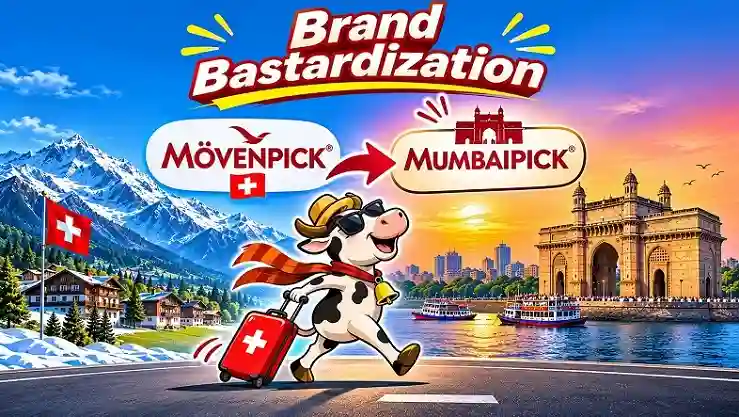
Image Credit: Bangkok Hotel News
When French hospitality giant Accor acquired Mövenpick in 2018 for roughly $560 million, executives promised the brand’s “European-Swiss heritage” would remain intact. Yet nearly a decade into Accor’s stewardship, this Bangkok Hotel News report along with industry observers, loyal travelers, and hospitality insiders increasingly argue that the conglomerate is hollowing out Mövenpick’s identity—turning a beloved culinary-led institution into just another interchangeable badge in an overcrowded brand portfolio.
A Portfolio of Forty Brands, A Loss of Focus
To understand what is happening to Mövenpick, one must look at Accor’s broader corporate playbook. Operating more than 40 distinct hotel brands—ranging from budget stalwarts like Ibis to ultra-luxury icons like Raffles—Accor thrives on scale, distribution power, and loyalty ecosystem integration through ALL (Accor Live Limitless). In such a massive machine, brands rarely retain autonomous creative direction; instead, they are slotted into market tiers to satisfy real estate developers looking for a recognizable flag.
Mövenpick was positioned as Accor’s upper-upscale workhorse, ideal for rapid conversions and new-build signings across Asia-Pacific, the Middle East, and emerging markets. Critics point out that when growth becomes the primary metric, brand DNA becomes negotiable. Rather than curating properties that genuinely reflect Swiss craftsmanship or culinary heritage, Accor has slapped the Mövenpick name onto disparate city hotels, beach resorts, and legacy conversions that share little beyond a logo and a booking engine. As one industry insider lamented at the time of the takeover, the greatest risk was that “the soul of Mövenpick will totally disappear and be eaten up by the Accor machine.”
The Disappearance of the Culinary Anchor
Nowhere is this identity crisis more visible than in the dining room. Unlike competitors born in boardrooms, Mövenpick was born in a kitchen. Historically, food and beverage were not mere amenities; they were the brand’s beating heart. Guests expected Swiss classics, artisan ice creams, specialty coffees, and rigorous culinary standards.
Today, walking through many Accor-era Mövenpick properties reveals a jarring disconnect. Across Southeast Asia and the Middle East, authentic Swiss or European culinary anchors have largely vanished from flagship outlets. In their place, hotels routinely feature generic all-day dining buffets alongside localized specialty restaurants—ranging from Indian and Peranakan concepts in Asia to standard Mediterranean or regional grills in the Gulf. While localizing menus to suit regional palates is standard practice in global hospitality, Mövenpick’s pendulum has swung so far toward generic localization that virtually zero trace of its Swiss gastronomic origin remains. Without its culinary anchor, a Mövenpick hotel becomes indistinguishable from a Pullman, a Swissôtel, or a Novotel down the street.
When Rituals Become Afterthoughts
Even the small, deliberate brand signatures meant to preserve Mövenpick’s Swiss charm have suffered from inconsistent execution. Chief among them is the daily “Chocolate Hour”—a complimentary afternoon ritual designed to showcase Swiss chocolate-making heritage through live demonstrations, fountains, truffles, and pastries.
In theory, Chocolate Hour is a brilliant differentiator. In practice, under decentralized operations, it has become a lottery. Travel forums and guest reviews are littered with accounts of underwhelming executions: properties serving meager trays of dry biscuits instead of artisan chocolate, staff failing to replenish empty platters during busy afternoons, or hotels quietly scaling back the offering to cut food costs. When a brand’s most famous signature experience feels like a reluctant box-ticking exercise, it signals a deeper breakdown in brand governance. Worse, some properties even have bypassed the practice despite claims on their website saying otherwise!
The Cost of Aggressive Franchising and Third-Party Management
The root cause of this inconsistency lies in the modern asset-light hotel model that Accor aggressively champions. By relying heavily on franchise agreements—including sweeping master franchise deals in markets like China—and third-party management contracts, corporate headquarters distances itself from day-to-day hotel operations.
Under these arrangements, property owners and local operators wield immense influence over staffing, food-and-beverage budgets, and service culture. While bringing in local leadership and regional operators helps tailor properties to domestic markets, rapid expansion without strict brand policing inevitably leads to operational drift. Leadership teams with little connection to European or Swiss hospitality traditions run properties according to standardized corporate spreadsheets rather than brand ethos. Service standards fluctuate wildly from one city to the next, maintenance lags at older conversions, and the cohesive guest journey that once defined Mövenpick fractures into dozens of localized interpretations.
Movenpick or Mumbaipick?
In some situations involving third-party licences to Indian or punjabi controlled groups that employ cheaper Indian GMs and Indian department heads, the Movenpick Hotels involved literally resemble what some are now calling as Mumbaipick Hotels!
A Cautionary Tale for Modern Hospitality
Accor’s handling of Mövenpick reflects a broader malaise across global hotel conglomerates: the commodification of heritage. In an era where hotel groups collect brands like trading cards to pitch to real estate investors, historic names are frequently purchased for their equity, stripped of the costly standards that built that equity, and scaled until their original meaning evaporates.
Mövenpick is still opening doors at an impressive clip, adding hundreds of keys across Asia, the Middle East, and Europe every year. On paper, Accor’s acquisition looks like a textbook growth story. Yet for travelers who remember what Ueli Prager built in Zurich—a hospitality brand defined by culinary integrity, Swiss warmth, and unmistakable character—the rapid expansion feels less like a renaissance and more like an erasure. If Accor continues to prioritize flag count over cultural stewardship, Mövenpick will survive in name only, another casualty of corporate homogenization.
For more on Movenpick Hotels, visit:
https://movenpick.accor.com/en.html