


Thailand’s hotel industry is facing fresh concerns over Chinese tourist arrivals after the Chinese Embassy in Bangkok published a new online safety warning on October 16, 2026. The advisory, highlighting kidnapping, human trafficking, and criminal scams involving Chinese nationals, has reportedly prompted some travelers to cancel hotel reservations or reconsider planned holidays. The timing is particularly troubling for Bangkok hotels preparing for the approaching peak tourism season. In recent days, Chinese media has also been covering cases involving kidnapping and extortion cases involving Chinese travelers in Thailand that were never covered by local Thai media.
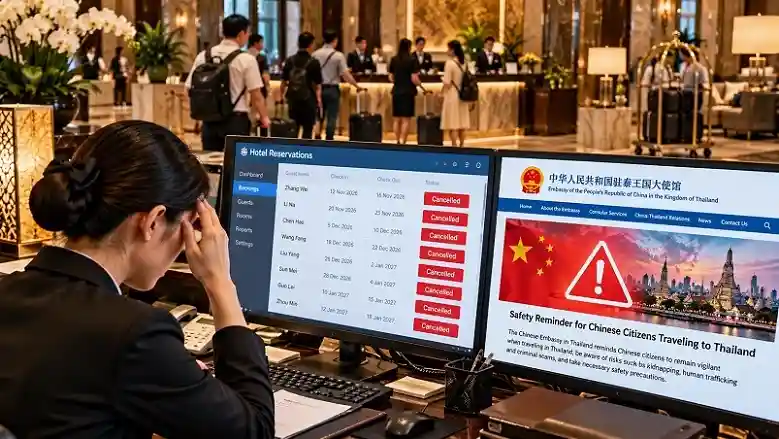
Image Credit: Thailand Hotel News
Chinese travelers remain an important market for Thailand’s hospitality industry, making any deterioration in visitor confidence a serious commercial concern. Hotels depend heavily on advance reservations to forecast occupancy, establish room rates, and prepare staffing arrangements. As this Bangkok Hotel News report reveals, the embassy’s warning has intensified anxiety about potential booking losses, particularly among properties expecting substantial Chinese arrivals during the coming months. Although cancellation reports are emerging, comprehensive figures establishing the nationwide impact have not yet been released.
Chinese Embassy Highlights Serious Security Threats
The embassy’s October 16 advisory urged Chinese citizens visiting Thailand to remain vigilant against criminal activities, particularly schemes involving abduction, fraudulent recruitment, and cross-border trafficking.
Travelers were encouraged to organize transportation through reputable providers, verify unfamiliar contacts, and avoid accepting suspicious invitations or unexpected travel arrangements.
Special attention was directed toward employment advertisements offering unusually generous salaries. Such opportunities sometimes target entertainers, social media personalities, and individuals seeking overseas assignments.
The embassy also advised travelers to maintain regular communication with relatives and share itinerary details, particularly when visiting unfamiliar destinations or arranging meetings with newly established contacts.
Advance Hotel Reservations Come Under Pressure
For Bangkok’s hospitality operators, the immediate concern extends beyond cancellations involving travelers scheduled to arrive within the next few days.
Advance bookings for November, December, and the year-end holiday period are particularly valuable because they help hotels anticipate demand and manage operating expenses.
Reported cancellations by Chinese visitors have therefore raised questions about whether the warning could influence broader travel decisions throughout the high season.
Some prospective tourists are reportedly considering Vietnam, Japan, or Malaysia instead, increasing competition among regional destinations seeking Chinese holidaymakers.
Kidnapping Reports Intensify Traveler Anxiety
The embassy’s intervention follows several disturbing incidents involving Chinese nationals that have attracted considerable attention in Chinese media.
In early October, a 34-year-old Chinese photographer reportedly disappeared after arriving in Bangkok. Relatives subsequently received a ransom demand and contacted authorities in both countries.
Another case, reported by The Beijing News in August, involved a Chinese woman allegedly abducted after entering a vehicle she mistakenly believed belonged to her tour guide.
She reportedly escaped the situation and obtained assistance at a police checkpoint.
These accounts have circulated widely online, reinforcing fears among potential visitors. Additional allegations receiving coverage in China but comparatively little attention in Thailand have further complicated efforts to reassure travelers.
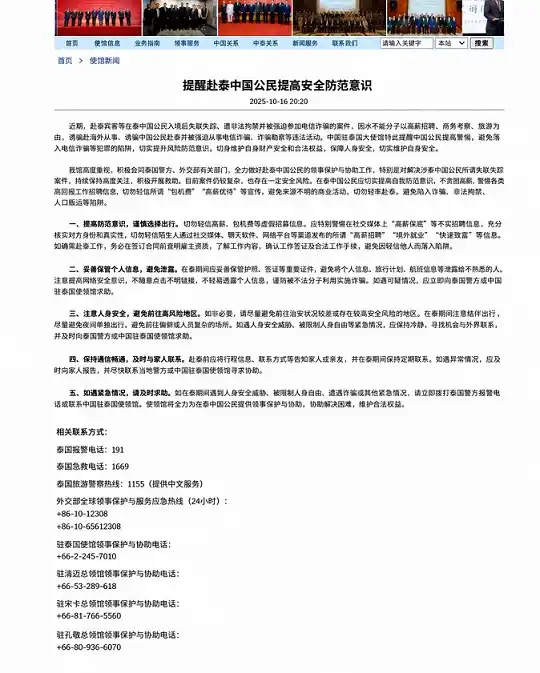
Image Credit: Chinese Embassy in Thailand
Border Trafficking Networks Remain a Major Concern
Security concerns also involve criminal organizations operating around Thailand’s borders, particularly areas adjoining Myanmar.
On October 10, Thai authorities arrested a 30-year-old suspect in Tak province over alleged involvement in trafficking three Chinese nationals recruited through deceptive employment offers.
Such operations frequently exploit promises of lucrative overseas work before transporting victims into compounds associated with online fraud and forced labor.
The internationally publicized disappearance of Chinese actor Wang Xing in January 2025 remains especially significant. He was reportedly lured by a fraudulent acting opportunity before being trafficked into Myanmar.
Although many criminal compounds operate outside Thailand, the country’s involvement as a transit route has contributed to negative perceptions among Chinese travelers.
Bangkok Hotels Face Wider Financial Uncertainty
A prolonged reduction in Chinese bookings could create challenges extending across Thailand’s tourism economy.
Hotels may face weaker occupancy, pressure to discount rooms, and difficulties estimating staffing requirements. Restaurants, transportation providers, shopping centers, and tour operators could experience corresponding reductions in customer spending.
Earlier industry expectations for Chinese arrivals had reportedly been revised from approximately nine million to seven million, illustrating the market’s existing recovery challenges. With this new warning by the Chinese embassy in Thailand, that figured is expected to be further reduced.
Further uncertainty surrounding traveler safety could complicate promotional campaigns and discourage early reservations, particularly among families and organized tour groups.
Restoring Confidence Before Peak Season
Thailand’s tourism authorities and hospitality businesses now face an important challenge: demonstrating that visitors can travel safely while responding transparently to legitimate security concerns.
Stronger action against trafficking networks, dependable transportation arrangements, and accessible assistance for foreign visitors could help rebuild confidence.
For Bangkok hotels, protecting existing reservations will be important, but restoring long-term trust among Chinese travelers may prove even more valuable.
Clear safety communication, effective enforcement, and visible cooperation between Thai and Chinese authorities could determine whether current concerns remain temporary or develop into a more damaging tourism slowdown.
The embassy’s warning underscores how quickly security perceptions can influence international travel decisions, particularly when alarming incidents circulate across social media. Thailand’s ability to address these concerns credibly will be crucial to safeguarding hotel revenue, sustaining visitor confidence, and protecting the wider tourism recovery.
The official Chinese Embassy warning advisory is available at: https://th.china-embassy.gov.cn/sgxw/202610/t20261016_12042063.html