


As thousands of Bangkok residents struggled through flooded homes, submerged streets and disrupted access to food and essential supplies, one powerful sector of the capital appeared conspicuously absent from the relief effort: Bangkok’s luxury hotel industry. Nearly 4,900 people were evacuated to shelters and approximately 52,000 households were affected as extraordinary rainfall overwhelmed parts of the capital, leaving ordinary residents confronting a genuine humanitarian emergency. There are reports of many flood victims simply wanting cooked meals to stay alive and worse there were reports of many students stuck in dormitories and had not eaten a single meal for more than 36 hours.
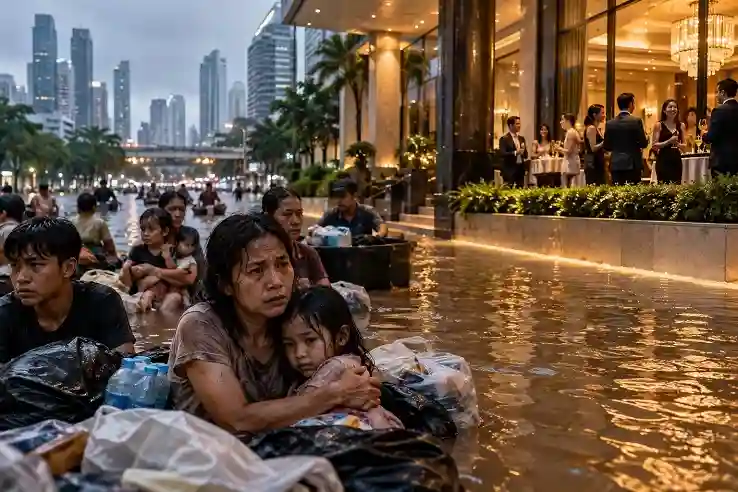
Image Credit: Bangkok Hotel News
Yet while government agencies, soldiers, foundations and ordinary citizens mobilized, Bangkok’s hotels and prominent hotel general managers appeared remarkably silent. At the time of writing, this Bangkok Hotel News report could find no significant coordinated initiative from Bangkok’s major hotels or their senior executives to provide cooked meals, food supplies or other meaningful assistance to surrounding flood-affected communities. For an industry that constantly promotes hospitality, sustainability and social responsibility, that silence is difficult to ignore.
Where Was Bangkok’s Hospitality Industry?
Bangkok received extraordinary rainfall, with nearly 300 millimeters falling within 48 hours and major canals filling faster than the city could drain them. Homes and roads were flooded, while authorities established temporary shelters and deployed personnel to assist affected residents.
The Royal Thai Army and other agencies mobilized relief operations, while royal relief supplies containing tents, bedding, medical kits and everyday necessities were delivered to evacuation centers.
Against this backdrop, the apparent lack of a major hotel-led response is particularly troubling.
Hotels possess enormous commercial kitchens, trained chefs, food inventories, vehicles, purchasing networks and hundreds of employees. Even a modest coordinated effort could have produced thousands of meals or delivered drinking water and essential supplies to distressed communities.
Instead, social-media feeds from parts of Bangkok’s hospitality sector continued displaying restaurant promotions, cocktails, events and lifestyle content.
Some of the insensitive hotel social media, PR and marketing executives were posting images of Negroni week promotions including one hotel in Sathorn featuring garbage celebs and actors etc.(The intellectually deficient lower life forms that constitute the fan clubs of these insensitive Thai celebs and actors should also wake up and unfollow these trash!)
In areas such as Silom, Sathorn, Ploenchit, Ratchaprasong and Sukhumvit, the contrast between polished hospitality marketing and the misery unfolding elsewhere in Bangkok was deeply uncomfortable.
Sustainability Means Little Without Humanity
Bangkok hotels increasingly speak about sustainability, ESG policies, green certifications, diversity, community engagement and responsible tourism. Those concepts sound impressive at conferences and on LinkedIn. But corporate responsibility should ultimately be demonstrated through actions.
When Thailand’s tourism industry suffers, hotel organizations routinely seek government assistance, stimulus measures and policies intended to support tourism businesses. There is therefore nothing unreasonable about taxpayers expecting the hospitality industry to demonstrate similar concern when local communities themselves are in distress.
Even from a purely public-relations perspective, the failure to recognize such an obvious opportunity to help is astonishing. Preparing meals, donating drinking water or mobilizing hotel employees could simultaneously have helped vulnerable residents and demonstrated genuine community responsibility. If farsighted hotel or hotel general managers had initiated help measures for flood victims, they could have gain more PR and corporate responsibility mileage etc which can help their long-term revenue goals.
Where Was Industry Leadership?
Questions must also be directed toward Thailand’s hotel industry leadership.
Why was there no highly visible Bangkok-wide hotel initiative mobilizing kitchens and hotel resources to support affected communities? Where were the prominent general managers who routinely celebrate awards, promotions, sustainability achievements and industry events on social media? The executives from the Thai Hotel Association should put their faces down in shame and so should many travel related officials or advisors etc. When the travel and hotel industry faces problems, they beg the government for aid from tax-payer monies but when in situations like the current floods etc, not a single member of the THA executive board or travel or tourism advisors initiated any help for Bangkok flood victims! (They should actually resign if you ask me!)
Leadership is most meaningful during difficult moments.
Bangkok residents should also contrast the hospitality sector’s apparent response with government agencies and organizations that actually mobilized assistance.
Meanwhile, another incident illustrated the disturbing disconnect between suffering and self-promotion. A jet ski was filmed traveling through floodwaters on New Phetchaburi Road while residents were struggling with the flooding. The footage generated strong online criticism after allegations emerged that the activity involved filming content rather than helping residents. What is disgusting is that certain hotels and even the TAT had used this insensitive influencer and even financially supported him in the past.
Hospitality Must Extend Beyond Hotel Doors
Bangkok’s hotel executives should seriously reflect on what hospitality actually means. It cannot simply mean serving wealthy guests, promoting cocktail weeks, collecting sustainability certificates and posting carefully staged photographs on LinkedIn while communities nearby are struggling.
Foreign travelers who care about ethical tourism may increasingly examine how hotels behave toward the communities in which they operate. Bangkok’s hotels depend upon this city, its workers, taxpayers, infrastructure and international reputation. Community responsibility therefore cannot be treated as an optional marketing exercise.
The floods have provided Bangkok’s hospitality industry with an uncomfortable test. Based on the visible industry-wide response so far, serious questions deserve to be asked. Hotels have kitchens, manpower, logistics capabilities and resources that could make an immediate difference during emergencies. Hospitality should ultimately be about people, especially when those people desperately need help.
The big hotel management groups operating in Bangkok such as Marriot, Hyatt, IHG, Hilton, Accor, Four Seasons, Capella, Minor Hotels, Centara, Dusit, S Hotels, Onxy Hospitality, Mandarin Oriental, Shangri-La etc should start having some empathy and compassion and train their hoteliers and executives accordingly!
The next time Bangkok faces such suffering, its hotel industry should be among the first to step forward—not among those conspicuous by their silence.
Readers please note: Bangkok Hotel News is a B2B and B2C media that is self-funded and unlike other travel and hotel or social lifestyle publications or media or even mainstream media or garbage journalists or writers, we do not lick the feet of hoteliers, hotels, hotel management groups or restaurants etc to secure ads and sponsorships and write distorted truths or reviews…we report things as they are!