


Bangkok Hotel News: In a city famed for its relentless energy, neon-lit streets, and round-the-clock activity, a surprising new hospitality trend is beginning to take root—silent hotels. These properties are designed not around indulgence or spectacle, but around the deliberate removal of noise, distraction, and digital overload. While still in its early stages, the concept is attracting growing attention from travelers seeking refuge from the sensory intensity that defines Bangkok.
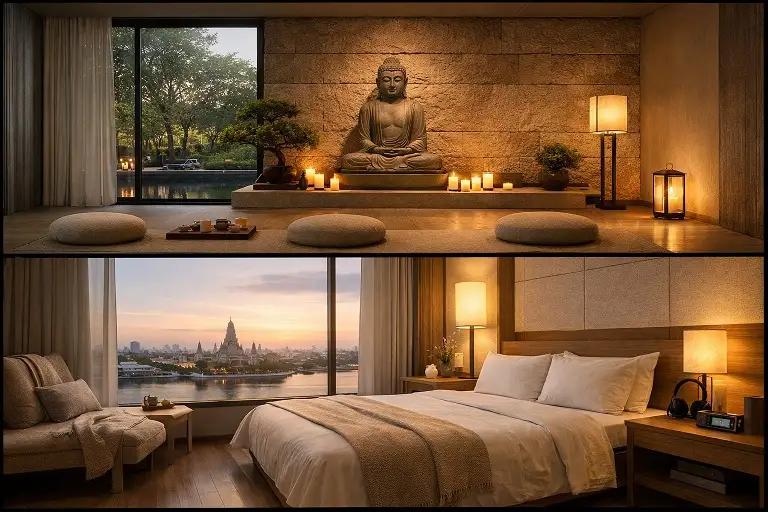
Image Credit: Bangkok Hotel News
Unlike traditional hotels that emphasize entertainment and social interaction, silent hotels introduce strict or semi-strict quiet policies. Guests are encouraged, and sometimes required, to limit phone use, avoid loud conversations, and engage in more mindful behavior during their stay. Some properties have begun experimenting with designated “silent floors,” where televisions are removed, notifications are discouraged, and even lighting is softened to create a calmer environment.
A Response to Modern Burnout
The emergence of silent hotels reflects a broader shift in traveler psychology. Increasingly, visitors are arriving not just physically exhausted, but mentally overwhelmed by constant connectivity and digital demands. This Bangkok Hotel News report highlights that several boutique operators have started integrating meditation rooms, device-free lounges, and even guided silence sessions into their offerings, signaling a departure from conventional hospitality norms.
Industry insiders suggest that this movement is being driven largely by younger professionals and long-haul travelers who are prioritizing mental recovery over entertainment. For them, the appeal lies not in what the hotel provides, but in what it deliberately removes. Silence, once considered an absence, is now being marketed as a premium experience.
Cultural Challenges in a Vibrant City
However, the concept of silent hotels presents unique challenges in a city like Bangkok. Known for its vibrant street life, nightlife, and cultural dynamism, the idea of enforced quiet may seem at odds with local expectations. Hotel operators must strike a careful balance between offering tranquility and respecting the social nature of Thai hospitality.
There are also practical considerations. Ensuring silence in a dense urban environment requires significant investment in soundproofing, architectural design, and staff training. Even then, external noise from traffic and nearby entertainment districts can be difficult to fully eliminate. As a result, many hotels are opting for partial implementations, such as quiet zones or time-based silence policies, rather than fully committing to the concept.
A Subtle Shift in Luxury
Interestingly, silent hotels may represent a new definition of luxury—one that prioritizes mental space over physical opulence. Instead of larger rooms or more amenities, the focus shifts to intangible qualities such as calmness, privacy, and emotional well-being. This aligns with a broader global trend in which wellness is becoming central to the travel experience.
Some early adopters in Bangkok are already reporting positive feedback from guests who appreciate the opportunity to disconnect. Whether this remains a niche offering or evolves into a mainstream expectation will depend on how well hotels can adapt the concept to local conditions without diluting its core appeal.
The Quiet Future of Hospitality
The rise of silent hotels in Bangkok signals a subtle but meaningful shift in the hospitality landscape. As travelers increasingly seek balance in an overstimulated world, the demand for environments that promote stillness and reflection is likely to grow. While challenges remain, particularly in integrating such concepts within a bustling urban setting, the early signs suggest that silence may soon become one of the most sought-after features in the industry.
If current trends continue, Bangkok could emerge as an unlikely pioneer in this space, redefining what it means to truly rest in one of the world’s busiest cities.
For the latest hospitality trends, keep on logging to Bangkok Hotel News.