


Bangkok Hotel News: Bangkok’s hotel dining scene is entering a period of growing uncertainty, with more outlets expected to either shut down or operate at a loss in the months ahead. Industry insiders say the warning signs are already visible across multiple properties, from luxury five-star establishments to mid-range hotels struggling to maintain profitability in their food and beverage divisions.
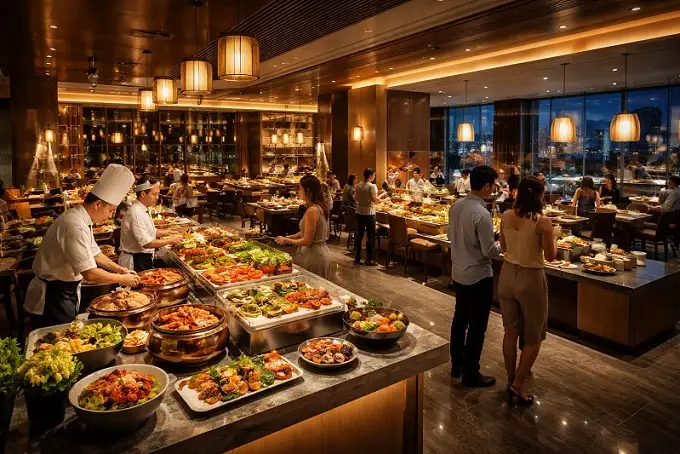
Image Credit: Bangkok Hotel News
While hotel occupancy levels are also showing worrisome projections, dining revenues are expected to even decline much more…a fact that hotel operators can no longer ignore.
Shifting Consumer Behavior Reshapes Demand
At the heart of the issue is a significant shift in consumer behavior driven by economic pressures. Rising household debt levels, both in Thailand and globally, are forcing people to cut discretionary spending. Diners are becoming far more selective, prioritizing value over experience, and reducing the frequency of eating out. This Bangkok Hotel News report observes that even traditionally strong customer segments—such as expatriates and international tourists—are now showing more cautious spending patterns.
Travelers who once indulged in hotel buffets or premium dining experiences are increasingly opting for more affordable alternatives. Many are choosing to explore local dining options outside hotel premises, where they perceive better value, authenticity, and often superior taste. This behavioral shift is not temporary but appears to be evolving into a long-term trend that is reshaping Bangkok’s hospitality landscape.
Rising Competition from Standalone Restaurants
Competition has intensified dramatically, particularly from standalone restaurants and independent eateries across Bangkok. These venues are not only offering more competitive pricing but are also elevating their culinary standards. In many cases, standalone restaurants now provide menus that rival or exceed hotel offerings, while maintaining significantly lower price points.
Buffet dining, once a stronghold of hotel F&B operations, is facing particular pressure. External buffet venues are gaining popularity due to better variety, fresher concepts, and more attractive pricing. Consumers are increasingly questioning the value proposition of hotel buffets, which are often perceived as overpriced despite offering extensive selections.
Economic Pressures and Global Uncertainty
The broader economic environment is adding further strain. Ongoing geopolitical tensions, including conflicts in the Middle East, have contributed to rising fuel prices and increased travel costs. These factors are indirectly impacting tourism flows and discretionary spending patterns. When travel becomes more expensive, tourists naturally tighten their budgets, leaving less room for high-end dining experiences.
Additionally, inflationary pressures are driving up operational costs for hotels, including food ingredients, utilities, and staffing. This creates a double burden—higher costs on one side and declining consumer spending on the other—pushing many hotel dining outlets into the red.
Operational Challenges and Strategic Shifts
Hotel operators are now being forced to rethink their F&B strategies. Some are scaling back operations, reducing buffet offerings, or shortening operating hours. Others are experimenting with partnerships, pop-ups, or leasing out restaurant spaces to independent brands to mitigate losses.
However, not all properties can adapt quickly enough. Older hotels with legacy dining concepts are particularly vulnerable, as they struggle to compete with newer, trend-driven establishments that better align with current consumer preferences.
What Lies Ahead for Bangkok’s Hotel Dining Scene
The outlook suggests that more closures are inevitable unless significant changes are implemented. Hotels that fail to innovate or reposition their dining offerings risk continued financial losses. The traditional model of relying on in-house guests and buffet-driven revenue is no longer sufficient in today’s highly competitive and economically constrained environment.
At the same time, there is still opportunity for those willing to adapt. Hotels that focus on unique culinary experiences, competitive pricing, and stronger branding may still capture market share. The challenge lies in understanding the new consumer mindset—one that values affordability, authenticity, and quality over prestige alone. As economic pressures persist and competition intensifies, Bangkok’s hotel dining sector will need to evolve rapidly to survive and remain relevant in a changing market landscape.
For the latest on Bangkok Hotel Dining, keep on logging to Bangkok Hotel News.