


Bangkok Hotel School: A Bold Move to Redefine Hospitality Education
In a decisive step toward reshaping hospitality education in Thailand, Dhurakij Pundit University (DPU) has announced a powerful collaboration with five prominent partners spanning the hotel industry, culinary associations, and secondary education institutions. The initiative is designed to bridge the long-standing gap between academic learning and real-world industry demands, giving students an early and sustained exposure to professional environments.
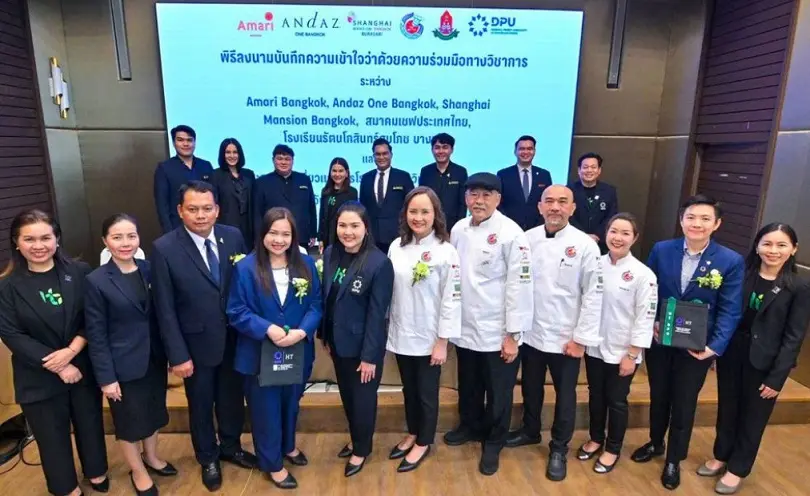
Image Credit: DPU
The Faculty of Tourism and Hotel Management at DPU has formalized this vision through Memorandums of Understanding (MoUs) with Amari Bangkok Hotel, Andaz One Bangkok Hotel, Shanghai Mansion Bangkok Hotel, the Thai Chefs Association, and Rattanakosin Somphot Bangkhen School. The agreements were officially signed on March 23, 2026, at the university’s Rector’s Building. At the heart of the initiative lies a transformative idea—to immerse students in the realities of the hospitality sector from their very first year, marking a significant departure from traditional education models. This Bangkok Hotel Schools news report highlights how early exposure is no longer optional but essential for future-ready graduates.
Industry Meets Academia in a Unified Vision
The collaboration brings together leading names in hospitality and education to create a seamless ecosystem for student development. The participating hotels—Amari Bangkok, Andaz One Bangkok, and Shanghai Mansion Bangkok—will act as real-world training grounds, allowing students to engage directly with operations ranging from front office management to food and beverage services.
Meanwhile, the Thai Chefs Association plays a critical role in elevating culinary education standards. By introducing students to professional-grade techniques and kitchen operations, the association ensures that even those not specializing in culinary arts gain valuable exposure to essential skills. From ingredient preparation to international food safety standards, students will benefit from direct mentorship by industry experts.
Equally significant is the partnership with Rattanakosin Somphot Bangkhen School, which establishes a continuous pipeline of talent. By connecting secondary education with university-level training, the initiative nurtures interest in hospitality careers from an earlier stage, ensuring students are better prepared before entering higher education.
A New Learning Model Built Around Experience
Unlike traditional systems that limit internships to the final stages of study, DPU’s approach introduces a progressive, multi-year development model. Students begin gaining practical exposure as early as their first and second years through fieldwork, part-time roles, and hands-on training. This early immersion allows them to explore different aspects of the industry, identify their strengths, and make informed career decisions.
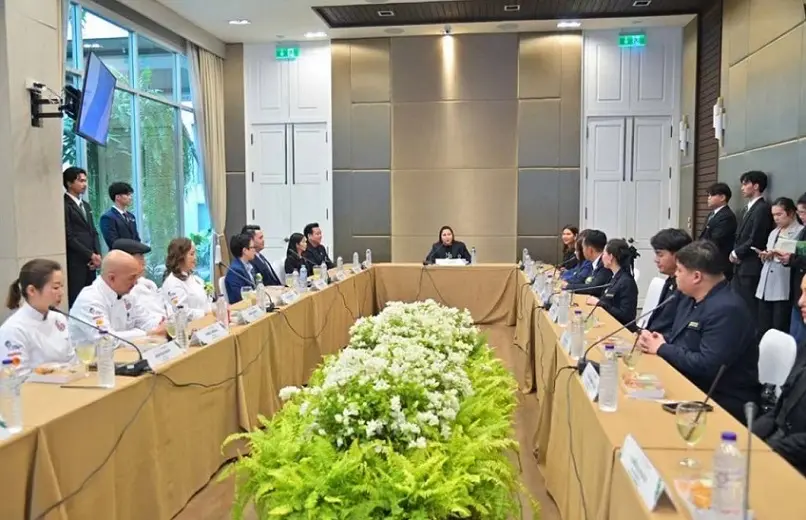
Image Credit: DPU
By the third and fourth years, students transition into more structured internships, with the flexibility to either deepen their expertise in a chosen field or explore new areas based on evolving interests. This layered approach not only enhances skill development but also reduces the uncertainty many graduates face when entering the workforce.
Closing the Skills Gap in Hospitality
One of the most impactful aspects of this collaboration is its focus on addressing critical skill gaps, particularly in culinary and back-end hotel operations. Traditionally, students without a culinary background have faced challenges in adapting to kitchen environments. Through the involvement of the Thai Chefs Association, these barriers are being dismantled.
Students will now gain firsthand experience in kitchen management, food preparation techniques, and global hospitality standards. This not only broadens their career prospects but also equips them with versatile skills that are highly valued in the international hospitality market.
Preparing Students for Real Careers—Not Just Degrees
The overarching goal of this initiative is to produce graduates who are not only academically qualified but also industry-ready. By integrating education with real work experiences, DPU ensures that students graduate with confidence, practical knowledge, and even income earned during their studies.
This collaborative model reflects a deeper understanding of modern student expectations. Today’s learners are no longer satisfied with theoretical knowledge alone—they seek meaningful experiences, career clarity, and financial independence while studying. By responding to these needs, DPU is positioning itself as a leader in forward-thinking education.
The broader implications of this initiative extend beyond a single institution. It signals a shift in how hospitality education can evolve to meet the demands of a rapidly changing industry. By fostering cooperation between universities, businesses, and schools, the model creates a sustainable framework for talent development that benefits all stakeholders.
In the long run, this approach could redefine how future hospitality professionals are trained across Thailand and even the wider region. Students will no longer enter the workforce as inexperienced graduates but as capable professionals who understand the dynamics of the industry from day one. This not only enhances employability but also strengthens the overall competitiveness of Thailand’s tourism and hospitality sector on the global stage.
For more details on DPU’s hospitality programs, visit:
https://www.dpu.ac.th/en/faculty-of-tourism-and-hospitality
For the latest on Bangkok Hotel Schools, keep on logging to Bangkok Hotel News.