


Key points
- Bangkok’s hotel sector is undergoing a quiet but structural shift as workcation rooms, once a pandemic-era experiment, are now being locked in as permanent inventory across multiple hotel segments.
- A guest who stays ten to twenty nights working remotely delivers higher total revenue than a weekend tourist, especially when food, laundry, and meeting space usage are factored in.
- A Modern coworking lounge with city view in a new hotel in Bangkok at Sukhumvit RoadImage Credit.
Bangkok Hotel News: Bangkok’s hotel sector is undergoing a quiet but structural shift as workcation rooms, once a pandemic-era experiment, are now being locked in as permanent inventory across multiple hotel segments. From luxury riverside properties to mid-scale city hotels, room layouts are being redesigned not for short-stay tourists chasing landmarks, but for long-stay remote workers seeking productivity, privacy, and comfort in one of Asia’s most connected cities.
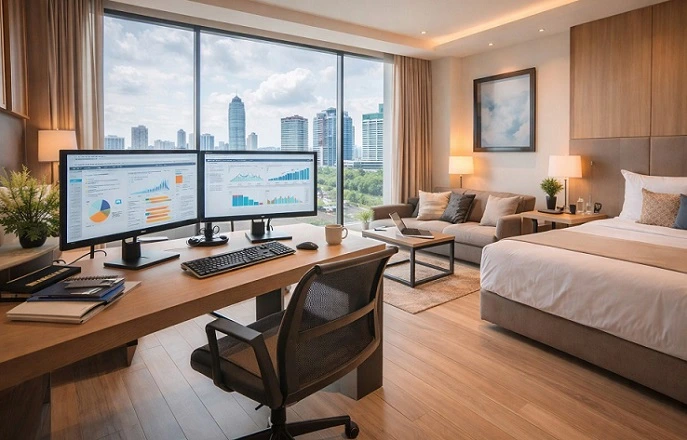
Image Credit: Bangkok Hotel News
What began as a temporary response to travel restrictions has evolved into a long-term strategy. Hotel operators now acknowledge that the traditional separation between leisure travel and work has blurred permanently. Guests are no longer asking only about views, minibars, or turndown service. Increasingly, they want ergonomic chairs, enterprise-grade Wi-Fi, multiple power outlets, soundproofing, and natural lighting that supports long working hours without fatigue.
Industry executives say demand for these rooms is not confined to foreign digital nomads. Corporate professionals from Singapore, Hong Kong, Japan, and even domestic Thai executives are booking extended stays to combine remote work with short leisure breaks. This Bangkok Hotel News report notes that several hotels have already reclassified former “temporary workcation floors” into standard room categories within their booking systems, signaling that the shift is no longer experimental.
From Temporary Fix to Strategic Redesign
During the height of travel disruptions, many Bangkok hotels improvised by placing desks near windows or offering printer access in lounges. Today, the redesigns are far more deliberate. Rooms are being stripped of excess decorative furniture and replaced with larger work surfaces, adjustable task lighting, and acoustic treatments. Some hotels are adding sliding partitions to separate sleeping and working zones, while others are installing dual monitors or offering them on request.
Hotel developers say these changes are being built into renovation plans rather than treated as optional upgrades. Several properties along Sukhumvit and Sathorn have confirmed that upcoming refurbishments prioritize work-ready layouts over traditional luxury accents. The logic is simple. A guest who stays ten to twenty nights working remotely delivers higher total revenue than a weekend tourist, especially when food, laundry, and meeting space usage are factored in.
New Guest Profiles Redefine Length of Stay
Workcation-focused rooms are also reshaping booking patterns. Instead of the typical two or three-night stay, hotels are seeing average lengths extend to one week or more. This has operational advantages, including lower housekeeping frequency and more predictable occupancy.
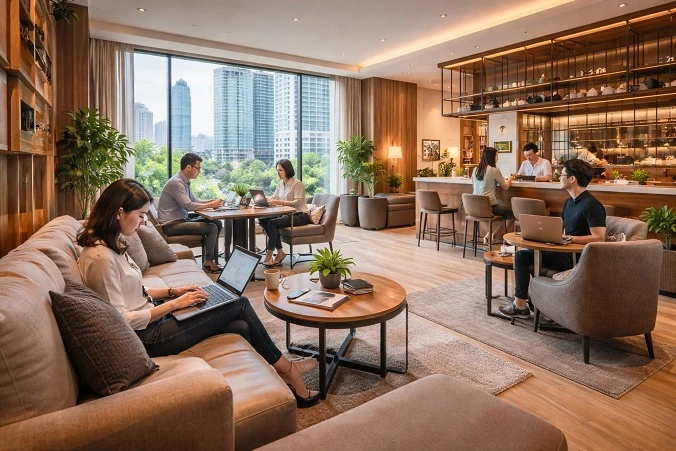
Image Credit: Bangkok Hotel News
Interestingly, these guests are less price-sensitive than backpackers but more value-conscious than luxury vacationers. They demand reliability rather than indulgence. Stable internet, quiet floors, and responsive technical support rank higher than infinity pools or elaborate breakfast spreads. Hotels that fail to deliver on these basics risk negative reviews that can quickly damage reputation in remote-worker communities.
Revenue Models and Competitive Pressure
The rise of permanent workcation inventory is also influencing pricing strategies. Some hotels now offer bundled monthly rates that include meeting room credits, daily coffee allowances, and airport transfers. Others partner with co-working brands to provide hybrid packages that blend private rooms with communal office access.
This shift is intensifying competition, particularly among mid-scale hotels that sit between budget accommodation and luxury resorts. Properties that cannot invest in redesigns may struggle to differentiate themselves, while those that move early are capturing repeat business from a growing global workforce untethered from offices.
Image Credit: Bangkok Hotel News
Long Term Implications for Bangkok Hotels
Bangkok’s appeal as a workcation hub is reinforced by its healthcare infrastructure, lifestyle offerings, and relatively low cost of living compared to regional rivals. Hotel analysts suggest that the city’s hospitality sector is no longer merely reacting to remote work trends but actively shaping them. By embedding work functionality into room design, hotels are betting that hybrid travel is not a phase but a permanent behavioral shift.
This evolution reflects a deeper recalibration of what a hotel room represents. It is no longer just a place to sleep between sightseeing excursions. It is an office, a retreat, and a living space rolled into one. Properties that understand this shift are positioning themselves for resilience in an uncertain global travel landscape, while those clinging to pre-pandemic models risk being left behind as guest expectations continue to evolve.
For the latest on the Workcation Trends, keep on logging to Bangkok Hotel News.