


Key points
- Dozens of hotels claim to follow sustainable practices, but few offer transparent proof of third-party certifications like LEED (Leadership in Energy and Environmental Design) or the Green Hotel Standard issued by the Department of Environmental Quality Promotion in Thailand.
- Meanwhile, a mid-range hotel in Ratchada advertises itself as a “green urban oasis” while using single-use plastics in all rooms and offering no recycling options for guests.
- For the latest about sustainability or the green drive in Hotels in Bangkok, keep on logging to Bangkok Hotel News.
Bangkok Hotel News: Eco Labels or Just Marketing Hype
As the global tourism industry shifts toward sustainability, Bangkok hotels are quick to jump on the “green” bandwagon. Guests checking into properties across Sukhumvit, Silom, and Sathorn are now greeted with signs promising eco-conscious operations, towel reuse programs, and “carbon-neutral” stays. But peel back the glossy brochures and online claims, and a troubling trend begins to emerge—many of these eco-initiatives are exaggerated, unverifiable, or downright misleading.v
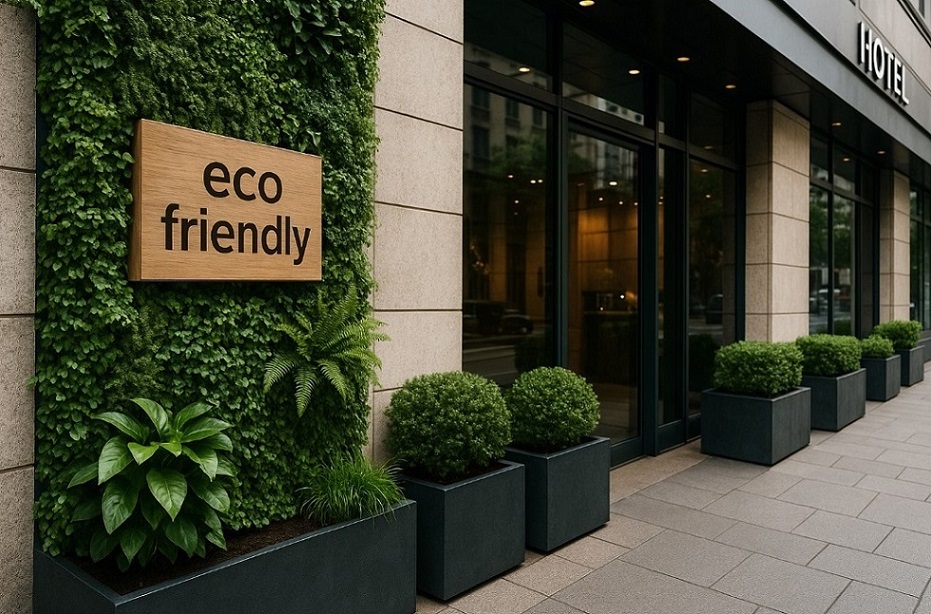
Eco Label Marketing Hype Among Hotels in Bangkok
Image Credit: Bangkok Hotel News
This Bangkok Hotel News report investigates the growing problem of greenwashing in the city’s hospitality sector. Dozens of hotels claim to follow sustainable practices, but few offer transparent proof of third-party certifications like LEED (Leadership in Energy and Environmental Design) or the Green Hotel Standard issued by the Department of Environmental Quality Promotion in Thailand. In many cases, properties are self-declaring themselves “eco-friendly” based on arbitrary internal checklists, hoping to woo socially conscious travelers without implementing real changes behind the scenes.
False Claims and Missing Certifications
A recent review of 50 prominent Bangkok hotels revealed that over 70% made some form of sustainability claim on their websites. However, fewer than 15% had verifiable third-party certifications. Even fewer disclosed their environmental performance metrics—such as water usage per guest, energy consumption, or waste diversion rates.
One luxury hotel near Lumpini Park touts its commitment to zero-waste operations, yet sends all its kitchen refuse and guest waste to the city’s landfill. A riverside five-star property markets its “solar-powered water heating system” but relies primarily on conventional electric boilers. Meanwhile, a mid-range hotel in Ratchada advertises itself as a “green urban oasis” while using single-use plastics in all rooms and offering no recycling options for guests.
The gap between marketing and reality is not just misleading—it undermines genuine efforts being made by a smaller but more transparent group of hotels. Properties like the Sindhorn Kempinski Bangkok or The Siam Hotel have taken verifiable steps toward sustainability through LEED certification and eco-conscious building design. These outliers prove that real sustainability is possible, but it requires investment, transparency, and long-term commitment—not just catchy phrases.
The Role of International Booking Platforms
Compounding the problem is the lack of accountability on global OTA platforms. Sites like Booking.com, Agoda, and Expedia have introduced “eco-badges” or “Travel Sustainable” labels, but the vetting process is opaque. Hotels can receive these tags simply by self-reporting certain practices without any verification. This creates an uneven playing field where hotels with real sustainability efforts are lumped together with those using greenwashing as a PR tactic.
Industry watchdogs have started calling for stronger regulations and third-party audits to prevent deceptive marketing. Some tourism boards in Europe and North America are already penalizing false sustainability claims with fines or delisting. Thailand has yet to follow suit in any meaningful way.
Guests Are Starting to Notice
What’s surprising is that the new wave of eco-conscious travelers is no longer easily fooled. Online reviews and social media posts increasingly call out properties for misleading claims. Influencers and travel bloggers have begun questioning what “green” really means when every hotel uses the same language but few back it up with data.
A growing number of tourists are now checking for real certifications—LEED, EDGE, EarthCheck, and Thailand’s own Green Hotel Standard—before booking. They are asking for transparency in supply chains, ethical labor practices, and real emissions reductions. The demand for green is real, but so is the scrutiny.
Bangkok’s hotel industry stands at a crossroads. Continue down the path of empty claims and surface-level fixes, or commit to serious, measurable sustainability practices that can earn the trust of an increasingly aware traveler base. Real change requires more than bamboo straws and sticker labels. It requires honesty, transparency, and investment in long-term impact.
For the latest about sustainability or the green drive in Hotels in Bangkok, keep on logging to Bangkok Hotel News.