


Key points
- In a bold leap into the future of hospitality technology, Kismet, a New York–based startup founded just last year, is transforming the way hotels engage with potential guests online.
- This Bangkok Hotel Technology News report explores how Kismet is eliminating the barriers that have kept hotels invisible in the AI age—while giving them a competitive edge against massive online travel agencies (OTAs).
- By addressing both sides of this equation, Kismet is positioning itself as not just a tech tool—but a strategic partner in reshaping the future of hotel marketing and revenue generation.
Bangkok Hotel Technology News: A Disruptive AI Engine That Brings Hotels into the Age of Instant Booking and Personalization
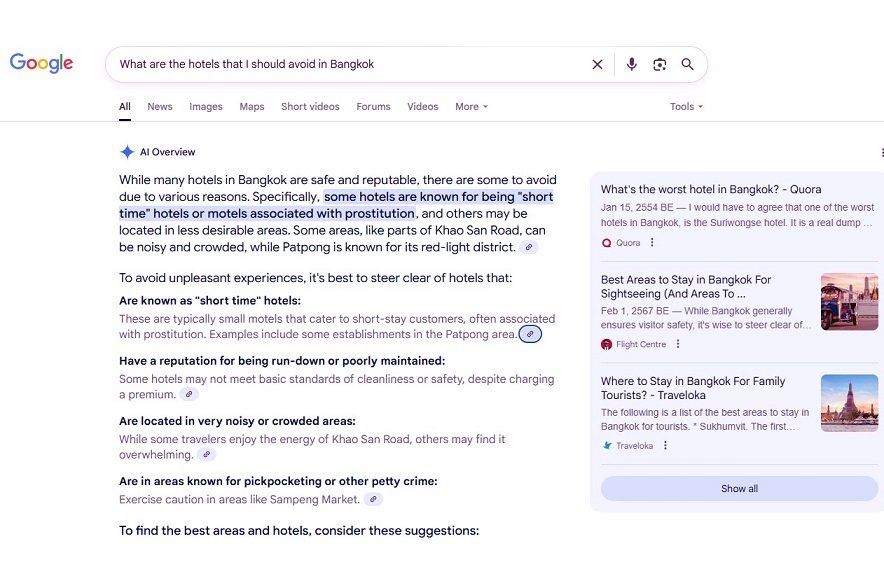
In a bold leap into the future of hospitality technology, Kismet, a New York–based startup founded just last year, is transforming the way hotels engage with potential guests online. Its innovative platform integrates hotels directly into AI-driven conversational search tools like ChatGPT and Google AI Overviews, enabling instant discovery and real-time bookings with a simple script. This Bangkok Hotel Technology News report explores how Kismet is eliminating the barriers that have kept hotels invisible in the AI age—while giving them a competitive edge against massive online travel agencies (OTAs).
Revolutionizing Reservations: Kismet AI’s Game-Changing Conversational Search
image credits: Stockshots
Kismet describes itself as a “managed AI-commerce cloud” purpose-built for the travel industry. What sets it apart is its use of a travel-specific open-source Model Context Protocol (MCP) that restructures messy hotel data—like rates, FAQs, menus, and policies—into machine-readable formats. Once this is done, hotels can be discovered by AI agents and booked within seconds, without technical overhead or integration hassles. This radically levels the playing field for independent properties and smaller chains, offering a plug-and-play solution that gets hotels listed in AI search results within 24 hours.
Turning Conversational Queries into Confirmed Bookings
When a traveler asks ChatGPT for something like “a top-rated hotel in Bangkok this Friday under $120,” Kismet ensures that participating hotels with matching profiles instantly appear—and more importantly, can be booked without ever leaving the conversation thread. This one-line integration has the potential to disrupt the entire online hotel search and booking funnel, making static websites and bulky OTAs seem outdated.
Kismet’s unique edge lies in its pricing model. It eliminates upfront capital costs by offering two tiers: usage-based edge API charges for every AI query, and a flat monthly infrastructure subscription that includes compliance, vector database storage, data re-indexing, and SLA support. This pay-as-you-grow model lets properties scale seamlessly without hiring in-house engineers or third-party IT contractors.
Solving Pain Points for Both Guests and Hoteliers
From the traveler’s perspective, Kismet aims to fix three major pain points in current booking experiences: lack of personalized hotel discovery, disjointed booking flows requiring multiple tabs or apps, and generic search results that fail to reflect unique hotel vibes or amenities. For hoteliers, the problems run deeper—dependence on OTAs with high commissions, being invisible in AI-driven searches, and the steep learning curve of adopting technical solutions they were never built for.
By addressing both sides of this equation, Kismet is positioning itself as not just a tech tool—but a strategic partner in reshaping the future of hotel marketing and revenue generation.
A Technology Backbone Built to Scale
Kismet’s architecture is both simple and powerful. Its open-source MCP service allows anyone to self-host and test the platform for free. However, most hotels opt for the full managed experience, which handles complex processes like crawling documents, building structured AI-ready data, maintaining PCI and GDPR compliance, and managing edge API performance under 300 milliseconds.
The platform is already monetizing, with hotels paying based on actual traffic and AI queries rather than arbitrary fees. This ensures alignment between performance, cost, and scale—something SaaS platforms often struggle with in the travel sector.
SWOT Snapshot Reveals High Potential with Calculated Risks
In a candid self-assessment, the Kismet team admits they are playing a high-stakes game. Their strengths include deep AI technical foundations, a supportive open-source community, and the ability to eliminate technical barriers for hoteliers. Weaknesses include the need for industry education and the financial burden of hosting costs as usage grows.
Opportunities are massive: conversational search is already being used by millions of travelers, and hotels that act fast can win market share back from OTAs. Threats include resistance to change and larger incumbents launching closed MCP systems, which Kismet argues would limit hotel freedom and create long-term dependencies.
The Team and Vision Behind the Innovation
Kismet is led by co-founders Jason Cincotta, a former hotelier with deep data systems experience, and Nathaniel Sena, a veteran in tech and social media. Together, they bring a unique mix of hospitality know-how and cutting-edge software development.
Their growth strategy focuses on developer toolkits, community-building via open-source channels, and pricing flexibility. By making it easy for tech-savvy chains and independents alike to experiment risk-free, Kismet hopes to become the obvious choice for direct-to-guest hotel strategies in the AI era.
Making AI Work for Hotels Instead of Against Them
Rather than forcing hotels to build flashy AI chatbots or virtual concierges—ideas that guests rarely ask for—Kismet argues for a more practical approach. It lets hotels keep creating great content on their websites and social media, while ensuring that this information is instantly accessible and actionable by guests’ personal AI assistants. No extra work is required from hotels beyond the one-line script.
As conversational commerce becomes the new normal, Kismet is not asking hotels to change what they do—but rather to allow AI to amplify their voice, branding, and direct sales potential. In an industry that has long been overshadowed by intermediaries, this subtle shift could prove revolutionary.
Why Kismet May Be the Hotel Industry’s Missing Link
Kismet’s pitch is clear: OTAs have dominated online travel by aggregating options in a Web 1.0 framework. But AI flips the script. Guests no longer want to browse 20 tabs—they want a smart assistant to do the work for them. And that assistant needs structured, fast, and accurate hotel data. Kismet makes sure hotels are front and center in that new system.
Looking ahead, the team is eyeing future expansions beyond hotels—into spas, restaurants, tours, and attractions—potentially making Kismet a full-stack AI distribution network for travel experiences.
Hotels that don’t adapt risk being left behind once again. But those that embrace this technology could reclaim their direct relationships with guests, improve margins, and deliver a more personal and seamless digital experience.
For more details on Kismet, check out their website at:
For the latest Bangkok Hotel Technology News, keep on logging to Bangkok Hotel News.