


Key points
- 8 billion baht), opened its doors only in July 2024 and was hailed as a symbol of progress in a nation recovering from natural disasters.
- In the middle of the second paragraph, this Hotel News report highlights that the protests have engulfed multiple state and private landmarks, leaving the capital in turmoil.
- The once-celebrated Hilton is gone, but its ruins will serve as a lasting reminder of a nation caught between hope and despair.
Hotel News: A Five Star Symbol in Flames
Kathmandu has been shaken by unprecedented violence as its tallest building, the Hilton Kathmandu, was burned down during the wave of “Gen Z protests.” The five-star hotel, valued at more than S$116 million (around 2.8 billion baht), opened its doors only in July 2024 and was hailed as a symbol of progress in a nation recovering from natural disasters. But today, its charred shell stands as a sobering reminder of Nepal’s growing political and social unrest. In the middle of the second paragraph, this Hotel News report highlights that the protests have engulfed multiple state and private landmarks, leaving the capital in turmoil.
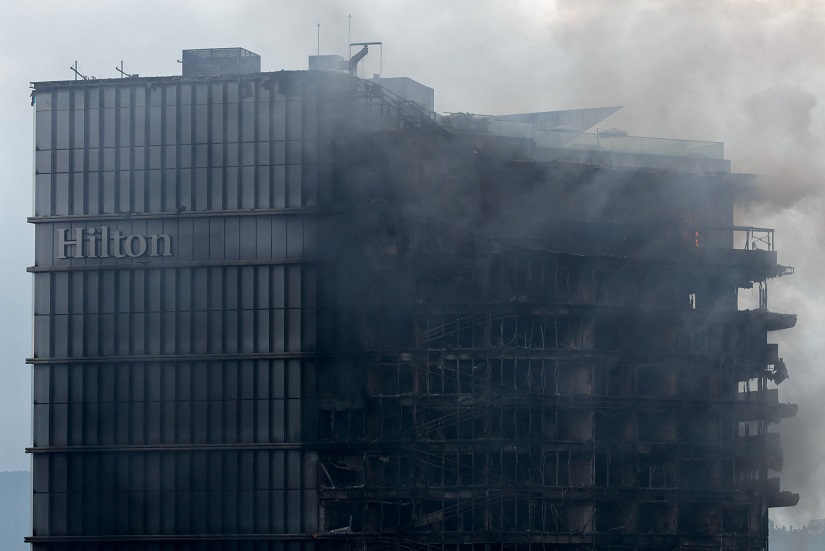
The Hilton hotel in Katmandu set ablaze by Gen Z protesters
Image Credit: Reuters
Protests That Shook the Nation
The demonstrations began after the government announced a controversial ban on 26 social media platforms, including Facebook and YouTube. Authorities argued it was to control misinformation, but citizens saw it as a direct attack on free expression. With youth unemployment at 20.8 percent and frustration over corruption and inequality festering, the ban triggered an outpouring of anger. Thousands of young people, including students in uniform, marched with placards reading: “Shut down corruption and not social media.”
Though the ban was later revoked, the protests escalated beyond control. So far, 30 people have lost their lives and more than 1,000 have been wounded. Key government structures such as the Parliament, the Supreme Court, and politicians’ residences have been set ablaze. Even the homes of former prime ministers KP Sharma Oli and Rajyalaxmi Chitrakar were destroyed.
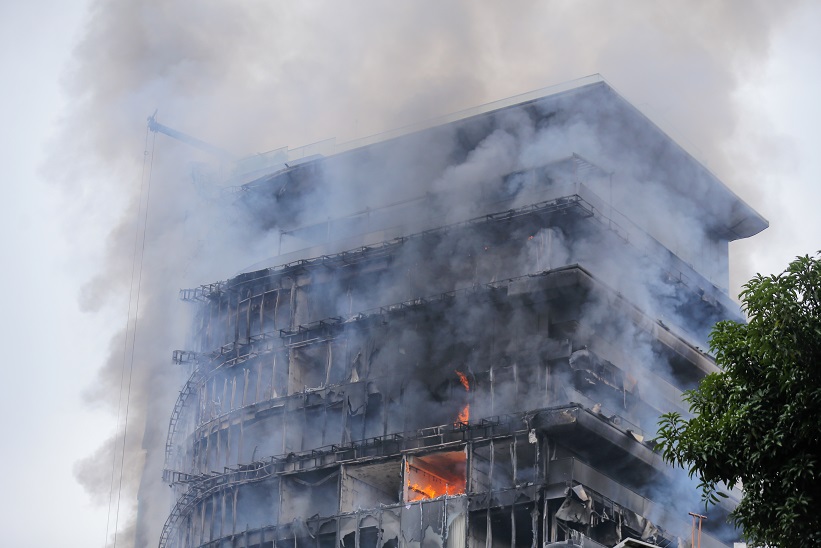
The Hilton hotel was apparently owned by the son of a corrupted politician
Image Credit: Reuters
Hilton Kathmandu Reduced to Ashes
The Hilton Kathmandu was not just another hotel. Designed with world-class seismic resistance, it was built to stand as a beacon of resilience in a city scarred by earthquakes. Its shear walls, vibration-damping systems, and earthquake-resistant infrastructure were supposed to guarantee stability in the face of natural disasters. Yet, no engineering marvel could protect it from the flames of discontent.
The property had been a showcase of luxury hospitality in Nepal. It offered sweeping views of the Kathmandu Valley and Himalayan peaks, alongside an infinity pool, five gourmet restaurants, a spa, and expansive event spaces. The rooftop Orion bar, decorated with traditional wood carvings and Mandala art, was among its signature attractions. Today, those grand interiors lie in ruins, their windows shattered and walls blackened by fire.
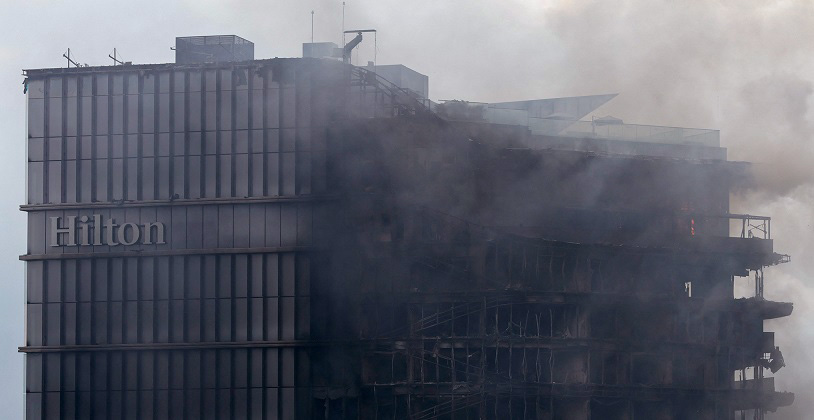
The US$116 million Hilton hotel was opened in July 2024.
Image Credit: Reuters
Unrest Leaves a Divided Nation
Despite resignations by key political figures, including Prime Minister Oli, the protests remain leaderless and spontaneous, fueled largely by social media. While some demonstrators insist the violence stems from opportunists hijacking the movement, the destruction of landmarks like the Hilton has amplified fears that Nepal is spiraling deeper into chaos.
Strikingly, reports confirm that two other luxury hotels in Nepal—Dusit Princess Kathmandu and Dusit Thani Himalayan Resort Dhulikhel—were spared during the protests. Both properties, part of Dusit International’s recent expansion into the country, continue to operate despite the turmoil.
A Nation at a Crossroads
The burning of Hilton Kathmandu symbolizes more than just the loss of a luxury hotel. It represents dashed hopes of renewal, a broken promise of stability, and the widening gulf between Nepal’s frustrated youth and its entrenched political elite. For Kathmandu’s hospitality industry, which had been banking on recovery and new investments, the destruction is a major setback. The city now faces the challenge of rebuilding not only its skyline but also the trust of its people and its global reputation.
The tragedy underscores how fragile progress can be when deep-rooted social and political divides remain unresolved. The once-celebrated Hilton is gone, but its ruins will serve as a lasting reminder of a nation caught between hope and despair.
And for the latest on hotels in Nepal, keep on logging to Bangkok Hotel News.