


Key points
- Operators are learning that a destination restaurant can pull in locals, drive room bookings and even define a brand more effectively than a lobby aesthetic or a points program.
- This Bangkok Hotel News report finds that the restaurant experience is now often the first touchpoint a consumer has with a hotel brand—sometimes months before they ever sleep there.
- But the playbook is expanding, and with it, the confidence that a memorable plate of food can do the work of a billboard campaign.
Chefs and Hotel Restaurants Step into the Spotlight
Once seen as a pleasant add-on to the room product, hotel dining in Bangkok is now carrying the banner for entire properties. Operators are learning that a destination restaurant can pull in locals, drive room bookings and even define a brand more effectively than a lobby aesthetic or a points program. The shift has been sharp. In 2024 and 2025, several major openings and refits leaned heavily on food stories rather than suites or spas. By early 2026, the city’s competitive set is treating kitchens as headline acts rather than support functions.
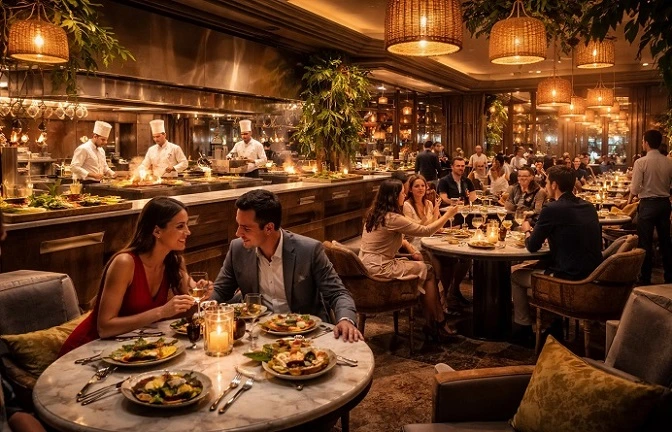
Hotel dining rooms are emerging as the city’s boldest brand ambassadors
Image Credit: Bangkok Hotel News
Some of the most successful hotel restaurants in Bangkok include: Elements, Inspired by Ciel Bleu at Okura Prestige Hotel, Kinu by Takagi at Mandarin Oriental, Nahm at COMO Metropolitan, Anne-Sophie Pic at Le Normandie-Mandarin Oriental, J’AIME by Jean-Michel Lorain-U Sathorn Hotel, Saneh Jaan at Sindhorn Kempinski Hotel Bangkok and Côte by Mauro Colagreco at Capella Bangkok
Dining brands without borders
Hotels are no longer content with a single in-house venue. Some are rolling out entire culinary portfolios under one roof, with each dining room sporting its own identity, tone and clientele. And in a twist that underscores confidence, many properties are pushing their food brands directly onto the street. Ghost kitchens, virtual restaurant concepts and partnerships with app-first delivery players are being spun up to extend reach beyond paying guests. This Bangkok Hotel News report finds that the restaurant experience is now often the first touchpoint a consumer has with a hotel brand—sometimes months before they ever sleep there.
Hotel restaurants behaving like independents
The biggest change is philosophical. A growing number of GMs and chefs insist that F&B outlets should stand alone. Menus are authored seasonally, social media pages run separate campaigns, and some venues operate without visible connection to their parent hotel. Signature chefs are recruited like headline performers, often backed by rotating guest line-ups and collaborative pop-ups. Those crossovers not only bolster reputation but cross-pollinate audiences, putting a hotel on the map for diners who might otherwise gravitate to Thong Lor or Chinatown’s street-front scene.
Cloud kitchens tighten margins and broaden reach
Part of the story is economic discipline. Ghost kitchens—once the domain of scrappy start-ups—have found a home in the bowels of major hotels, using spare prep capacity and off-peak labor. Delivery-only labels help fill midday lulls and attract new diners who may convert later to dine-in or stayover guests. With corporate travel still not fully back to pre-pandemic peaks, the incremental revenue keeps operations steadier. The city’s largest groups are using data to decide exactly what concept to launch, from comfort Thai to plant-forward bowls, each tailored to demand spikes in nearby districts.
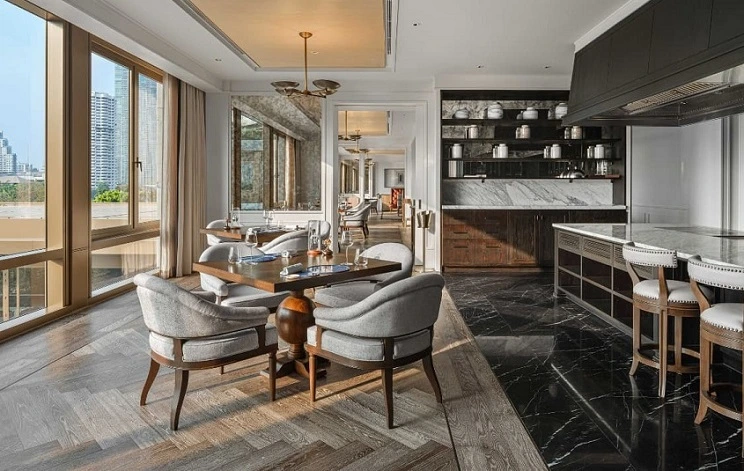
The Côte by Mauro Colagreco at Capella Bangkok
Image Credit: Capella Bangkok
Local loyalty over tourist churn
Crucially, hotels are chasing repeat business from Bangkok residents, not just transient visitors. Brand-building plays out through neighborhood tasting nights, collaborations with farmers upcountry, and cocktails developed with Thai distillers. Loyalty apps now track F&B spend with the same seriousness as room nights, turning diners into members long before they arrive for check-in. For hoteliers, the payoff is clear: a property that becomes the go-to Saturday restaurant is rarely forgotten when a family wedding or visiting friend requires a stay.
Where the trend leads next
Insiders expect 2026 to deliver even more culinary creativity. Boutique properties in Talat Noi and Rattanakosin are already curating chef collectives, giving multiple rising stars a stage under one roof. Rivals along the river are planning floating supper clubs and seasonal kitchens built around monsoon harvests. The risk, of course, is oversupply. Not every dining room can be a sensation. But the playbook is expanding, and with it, the confidence that a memorable plate of food can do the work of a billboard campaign.
A final thought
The message from Bangkok’s hotel sector is crisp: food is now the front door. The right venue can crystallize a brand, build a fan base from the ground up and turn an anonymous tower into a coveted address. As more operators double down on chef talent, creative partnerships and delivery-first ventures, F&B is poised to become the chief storyteller of the city’s hotels. Whether through a tasting menu, a bar takeover or a clever cloud-kitchen experiment, dining stands ready to attract locals and visitors alike, shaping loyalty and ambition in ways that traditional marketing rarely achieves. For owners and guests, the coming year promises a deeper fusion of flavor, culture and hospitality that could set new standards for Asia’s most competitive hotel market—and beyond.
For the latest on hotel restaurants, keep on logging to Bangkok Hotel News.