


Key points
- Across Bangkok, luxury and upscale hotels continue to unveil grand ballrooms, sleek boardrooms, and expansive pre-function areas—despite a steady decline in real-world demand for in-house corporate events.
- There are more than, 1,307 hotels in Bangkok and almost 81 percent of the have meeting room facilities and 67 percent of them have huge ballrooms.
- For the latest on hotel meeting rooms and ballrooms, keep on logging to Bangkok Hotel News.
Bangkok Hotel News: Oversupply in a Post Pandemic Event World
Across Bangkok, luxury and upscale hotels continue to unveil grand ballrooms, sleek boardrooms, and expansive pre-function areas—despite a steady decline in real-world demand for in-house corporate events. From Sukhumvit to Sathorn, developers are still allocating large square meterage for meeting spaces even as hybrid work, offsite venues, and leaner corporate travel budgets reshape the events landscape. There are more than, 1,307 hotels in Bangkok and almost 81 percent of the have meeting room facilities and 67 percent of them have huge ballrooms.
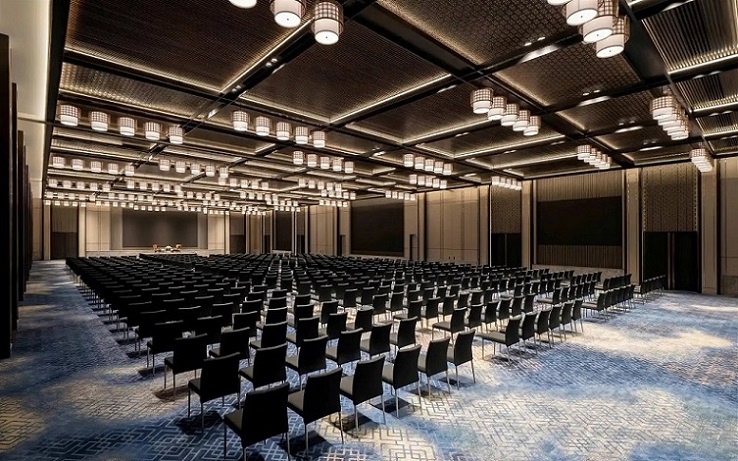
Despite falling demand, Bangkok hotels are still adding underused meeting rooms and ballrooms that rarely generate returns
Image Credit: StockShots
The paradox is striking. Business travel has not returned to pre-pandemic levels, and multinational companies are slashing costs tied to conferences and internal meetings. Yet hotel blueprints submitted for 2026 to 2028 openings show meeting space footprints on par with peak-era MICE projections. This Bangkok Hotel News report explores why hotels are stuck in a ballroom bubble with few signs of course correction.
Legacy Assumptions and Brand Mandates
A major reason lies in legacy assumptions tied to pre-2020 financing models. Many hotel projects were conceptualized during a period when large on-site meeting capacity was seen as a value multiplier. Lenders, especially those funding international chains, favored properties with banquet facilities that could host 200 to 500 guests. These assets were pitched as MICE-friendly and assumed to deliver year-round F&B income.
In addition, many international hotel brands have standard development guidelines that mandate a minimum ratio of meeting space to room count. Whether or not local demand supports such facilities, developers often agree to build them to secure the brand, meet operator criteria, or unlock incentives like marketing support.
Changing Corporate Behavior and Guest Expectations
Post pandemic, corporate behavior has evolved. Firms now favor smaller, decentralized team gatherings over large annual summits. Hybrid formats, which require only studio setups and livestream tech, are rendering traditional ballrooms obsolete. Moreover, companies increasingly choose stylish offsite venues—cafés, creative hubs, or co-working spaces—for gatherings that emphasize informality and innovation over formal hotel environments.
Even leisure-focused hotels are not immune. Many built mid-sized event spaces expecting destination weddings and social functions to fill the void. Yet oversaturation means fierce competition for a shrinking pie, driving prices down and leaving many spaces underutilized or dark.
A Hidden Drag on Profitability
Meeting spaces are expensive to build, operate, and maintain. They require additional staff, HVAC systems, lighting, and cleaning. When underused, they become a drag on revenue per available square meter. Yet few hotels are willing to admit the mismatch for fear of spooking investors or diluting their MICE branding.
To move forward, Bangkok’s hotel sector may need to rethink spatial allocation entirely. Flexible spaces that can transform between events, coworking, and even pop-up retail may become the new norm. Until then, the city’s hotels risk repeating the mistakes of the past—building to impress, rather than building for actual demand.
For the latest on hotel meeting rooms and ballrooms, keep on logging to Bangkok Hotel News.