


Key points
- Industry insiders confirm that average occupancy for the months of May and June 2025 has dropped to below 65 percent in many properties, with some barely reaching 30 percent even on weekends.
- This Bangkok Hotel News report has found that several major properties in key commercial zones like Sukhumvit, Silom, and Sathorn have resorted to slashing room rates just to stay competitive.
- If urgent reinvention strategies are not put in place—both by hotel operators and Thailand’s tourism authorities—Bangkok risks being left behind in an increasingly competitive and dynamic global travel market.
Bangkok Hotel News: Occupancy Rates Plummet Across All Tiers
Bangkok’s once-booming hospitality sector is facing one of its toughest years since the COVID-19 crisis, with hotels across all categories—luxury, midscale, and budget—reporting disturbingly low occupancy rates. Industry insiders confirm that average occupancy for the months of May and June 2025 has dropped to below 65 percent in many properties, with some barely reaching 30 percent even on weekends.
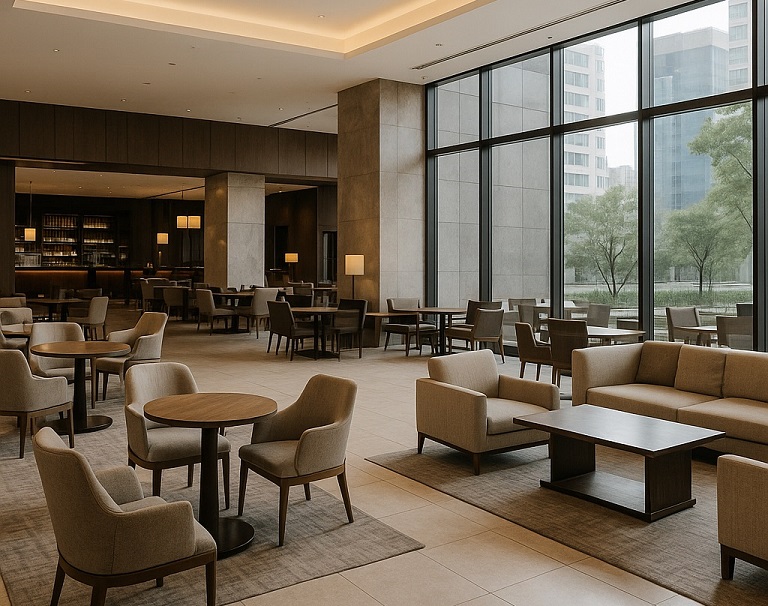
Title: Hotels in Bangkok are beginning to look empty
Image Credit: AI-Generated
This Bangkok Hotel News report has found that several major properties in key commercial zones like Sukhumvit, Silom, and Sathorn have resorted to slashing room rates just to stay competitive. Meanwhile, boutique hotels in heritage districts such as Chinatown and Banglamphu are quietly shutting their doors temporarily, citing operational unsustainability due to weak forward bookings.
Food and Beverage Revenue Nosedives
The crisis isn’t confined to rooms alone. Food and beverage outlets in five-star hotels, once bustling with tourists and high-spending locals, are now witnessing sparse reservations. Hoteliers say that even themed Sunday brunches and seafood buffets—usually the sector’s cash cows—are drawing far fewer diners. Corporate lunch crowds are thinning too, driven by hybrid work trends and cost-cutting measures in Bangkok’s business sector.
Event spaces and banquet halls, once seen as reliable sources of non-room income, are now lying dormant. Many hotels are reporting a 40 to 60 percent year-on-year drop in MICE (meetings, incentives, conferences, and exhibitions) revenue. While some regional events have returned, big international conferences have shifted to competing cities such as Kuala Lumpur and Ho Chi Minh City.
Thailand No Longer Seen as a Safe Bet
The loss of Chinese travelers—a group that once formed a core pillar of Bangkok’s inbound tourism—is being deeply felt. Ongoing safety concerns, viral online videos of tourist scams, and rising geopolitical tensions have discouraged many.
Chinese tour operators have reportedly removed Bangkok from priority packages, pushing their customers toward Japan, South Korea, or even Dubai.
Singaporeans and Malaysians, who once frequented Bangkok for weekend shopping and dining sprees, are increasingly opting for emerging destinations with fresher appeal like Danang, Melaka, or Lombok. Travel influencers are now showcasing places like Vietnam’s Ha Giang or Malaysia’s Desaru Coast as the new hotspots.
Shift in Global Travel Tastes Hurts the Capital
Meanwhile, American tourists are favoring destinations closer to home, with a noticeable pivot to Latin America—Mexico, Colombia, and Costa Rica are seeing record visitor numbers. European vacationers are bypassing Southeast Asia altogether in favor of countries like Spain, Romania, and Poland for summer escapes. For Europeans who are tropical beach lovers, Bali, Maldives, Mauritius, and Vietnam’s Phu Quoc Island are fast replacing Phuket and Pattaya.
The hard truth is that Bangkok and Thailand are slowly losing their charm as a must-visit destination. Once famed for its vibrancy, affordability, and uniqueness, the city now suffers from over-tourism fatigue, rising prices, poor urban management, and a lack of innovative new experiences.
If urgent reinvention strategies are not put in place—both by hotel operators and Thailand’s tourism authorities—Bangkok risks being left behind in an increasingly competitive and dynamic global travel market. Stakeholders must rethink marketing narratives, elevate safety standards, and launch bold destination campaigns to bring back both leisure and corporate travelers before the situation worsens further. For the latest on the local hotel industry, keep on logging to Bangkok Hotel News.