


Key points
- This Bangkok Hotel Technology News report explores how the fast-paced adoption of technology is reshaping the hotel experience in the Thai capital, raising both praise for efficiency and concern over the loss of personal touch.
- “I used to love chatting with the staff at the front desk when I arrived,” said a German guest staying at a riverside luxury hotel.
- The evolution of the hotel lobby in Bangkok signals a shift in how service is defined and delivered.
Bangkok Hotel Technology News: The New Face of Hospitality Arrives Without a Smile
Bangkok’s hotel lobbies are undergoing a dramatic transformation as automation and AI-powered systems replace traditional front-desk staff. What was once a hallmark of Thai hospitality—personalized service, warm greetings, and human interaction—is now increasingly being handled by touchscreen kiosks, chatbots, and mobile apps.
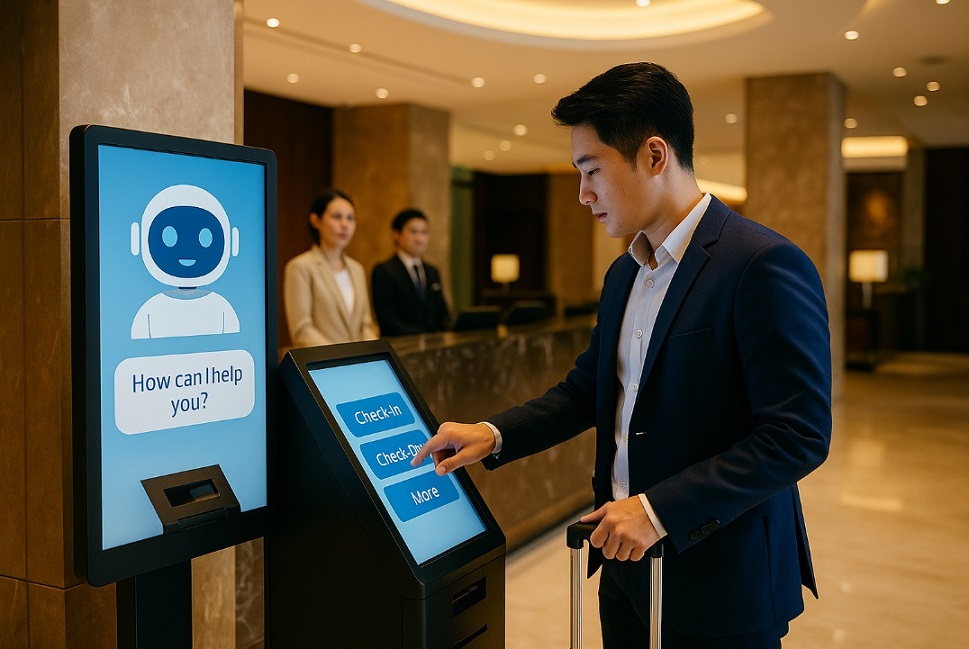
Thai hospitality is now increasingly being handled by touchscreen kiosks, chatbots, and mobile apps.
Image Credit: AI-Generated (DeepSeek)
This Bangkok Hotel Technology News report explores how the fast-paced adoption of technology is reshaping the hotel experience in the Thai capital, raising both praise for efficiency and concern over the loss of personal touch. From luxury hotels along the Chao Phraya to boutique properties in Thonglor, the shift is no longer experimental—it’s becoming the new normal.
Check In Check Out and Move On
Hotels are streamlining the check-in process with mobile apps that allow guests to bypass the front desk entirely. Guests can now receive digital room keys via smartphone, choose their room before arrival, and even request services through messaging platforms like LINE or WhatsApp. Chatbots, available 24/7, are handling everything from restaurant bookings to amenity requests—often faster than human staff.
The trend, which gained momentum during the COVID-19 pandemic due to hygiene concerns, has now solidified into standard operating procedure for many properties. Hotel executives claim automation helps cut labor costs, improves accuracy, and enhances convenience for tech-savvy travelers.
Yet not everyone is convinced this progress is entirely positive.
Guests Notice the Lack of Human Connection
Long-time visitors to Bangkok—especially repeat guests from Japan, Europe, and the United States—are voicing mixed feelings. While some appreciate the speed and flexibility of digital tools, others lament the decline in authentic Thai hospitality.
“I used to love chatting with the staff at the front desk when I arrived,” said a German guest staying at a riverside luxury hotel. “Now I walk into the lobby and just tap a screen. It’s efficient, but cold. It doesn’t feel like Thailand anymore.”
Hoteliers acknowledge this sentiment but say the demand for contactless service has outpaced resistance. Some are now trying to blend technology with tradition by offering digital service options alongside optional human assistance, especially during peak hours.
Chatbots Are Getting Smarter but Not Always Kinder
AI-powered chatbots are becoming increasingly intelligent, capable of handling complex queries in multiple languages. Some high-end hotels in Bangkok have even integrated AI with CRM systems to anticipate guest needs based on previous stays.
However, not all experiences are seamless. Complaints have surfaced about unhelpful responses, system bugs, and the inability of chatbots to handle nuanced requests. In the hospitality industry, tone and empathy matter—qualities AI still struggles to fully replicate.
A manager at a five-star Sukhumvit property admitted, “We’ve had to step in when the chatbot misunderstood guest complaints. It’s a great tool, but not a full replacement for a human being.”
A Future of Hybrid Hospitality
Despite the rush to automate, many experts predict that the future lies in a hybrid model—one that combines digital tools with curated human interaction. Bangkok hotels are already experimenting with “digital concierge” lounges, where staff assist guests in navigating self-check-in systems or using AI chatbots effectively.
Hotels are also investing in training staff to handle more specialized roles such as cultural liaisons, wellness guides, or event hosts—roles that go beyond repetitive tasks and focus on genuine engagement.
In an age where convenience is currency, automation is here to stay. But Bangkok’s most iconic hotels will likely survive not just by going digital, but by knowing exactly when to bring back the human touch.
The evolution of the hotel lobby in Bangkok signals a shift in how service is defined and delivered. While technology is redefining efficiency, it’s the delicate balance of innovation and tradition that will determine whether Bangkok retains its crown as one of the world’s most beloved hospitality capitals.
For the latest Bangkok Hotel Technology News keep on logging to Bangkok Hotel News.