


Siam Kempinski Hotel Bangkok has unveiled a new culinary chapter at Sra Bua by Num Weerawat, with acclaimed Chef Weerawat “Num” Triyasenawat taking the helm as Culinary Director. The transformed restaurant puts Thailand’s biodiversity at the center of its identity, celebrating seasonal produce, local communities, heritage rice and fermentation traditions through an experience inspired by ingredients found across the country’s land, rivers and seas.
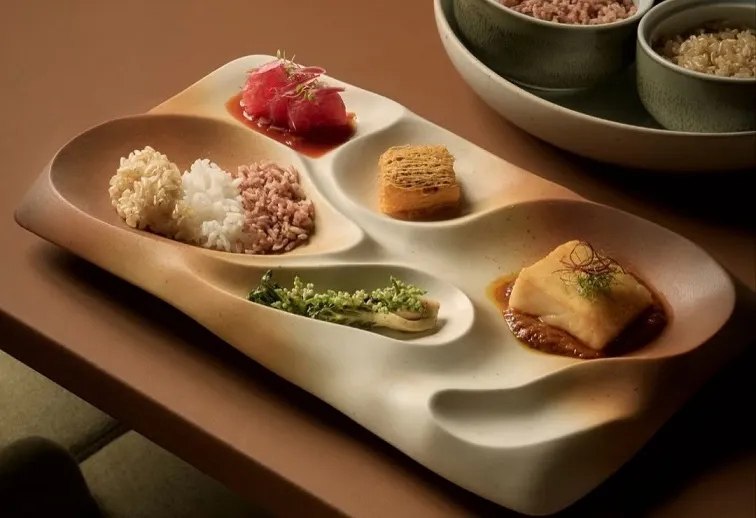
Image Credit: Siam Kempinski Hotel Bangkok
The transformation goes considerably further than a new chef and menu along with restaurant renovations. Sra Bua has been reimagined around the origins of ingredients, the environments in which they grow and the people who produce them. This Bangkok Hotels News report finds that one of the biggest changes is the introduction of two contrasting tasting journeys, with Chef Num moving away from familiar regional dishes to explore Thailand through biodiversity, seasonality and the natural character of its ingredients.
A Fresh Identity for Sra Bua
While elements of the original restaurant remain, the dining journey has changed substantially.
Guests encounter displays of fermented products, seasonal ingredients and local Thai rice before reaching their tables, while Thai crafts add another cultural dimension to the experience.
Chef Num’s philosophy is based on allowing nature to influence his cooking. Instead of creating a dish first and then demanding particular ingredients, he looks at what Thailand’s ecosystems and seasons provide.
It is an approach developed over years of working with local produce, including his time at Samuay & Sons and Mah Noi Food Lab in Udon Thani. Although Chef Num became particularly associated with Isan ingredients, his travels throughout Thailand broadened his knowledge of producers and produce from other regions.
Sra Bua now provides a Bangkok stage for that wider exploration.
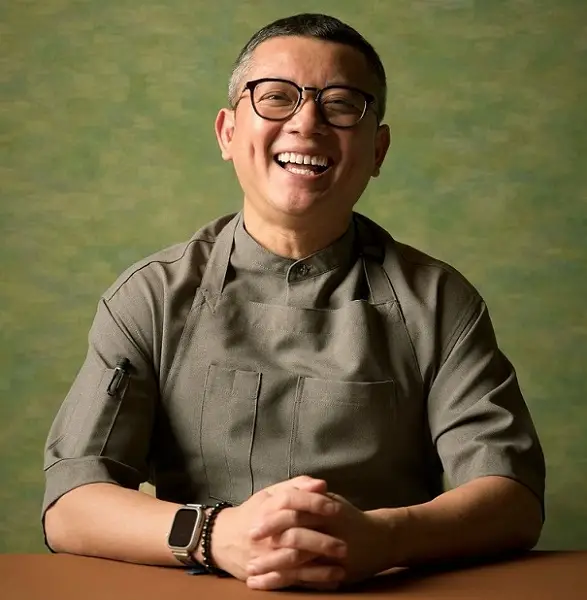
Image Credit: Siam Kempinski Hotel Bangkok
Two New Tasting Journeys
The restaurant offers the Signature Biodiversity Journey and Plants & Roots Forward Journey, both priced at THB 4,900++ per person.
The Signature Biodiversity Journey explores ingredients from Thailand’s seas, rivers and land, combining seafood and meat with vegetables, fruits, grains and local rice varieties.
Plants & Roots Forward is completely meat-free, placing vegetables, roots, grains and other botanical ingredients in the starring roles.
Rather than adapting meat dishes for vegetarian diners, Chef Num has designed the menu specifically around plants. Fermentation, spices, marinades and different cooking techniques build flavor and complexity without disguising the character of the ingredients.
The two menus therefore provide different ways of exploring Thailand’s biodiversity while sharing the same underlying philosophy.
River Prawn, Sour Fruits and Lotus
One of Chef Num’s favorite dishes on the Signature Biodiversity Journey is Citrus and Sour Fruits, combining river prawn with lime, lemon, bitter orange, kaffir lime, tangerine and calamansi.
The dish began with the river prawn, with Chef Num building the remaining elements around its natural compatibility with sour fruit.
The citrus ingredients appear in a Thai chilli preparation he calls nam phrik nakhon baan, made with river prawn and chilli paste. Grilled river prawn is presented beneath a prawn cracker, while the grilled head and its rich tomalley are accompanied by khao nook nga, a sticky rice ball.
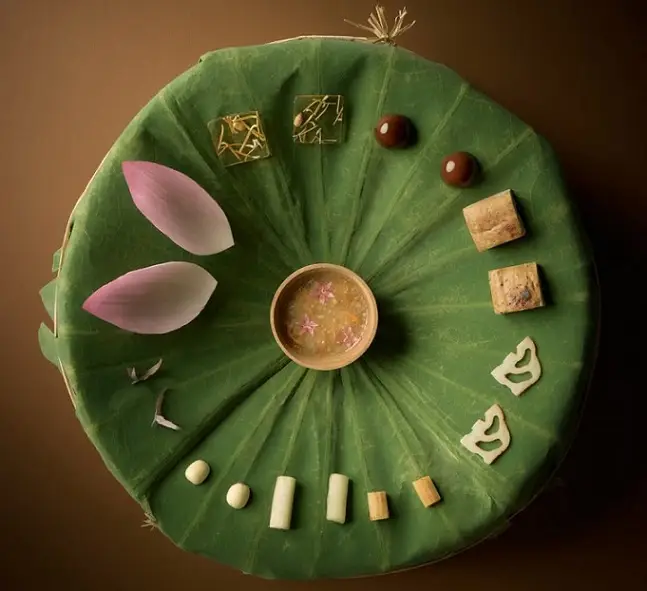
Image Credit: Siam Kempinski Hotel Bangkok
Another notable course, Bua, demonstrates Chef Num’s root-to-leaf and nose-to-tail approach.
Almost every part of the lotus is used, including smoked lotus root, fresh lotus stem, lotus kimchi, fresh lotus seeds, shoots and the flower itself.
Chicken is treated with a similar philosophy. Chicken consommé jelly filled with lotus pollen and baby lotus seeds is served alongside chicken liver mousse and mok gai, slow-grilled chicken prepared in banana leaf.
Together, the dishes demonstrate how familiar Thai ingredients can be explored from different directions without simply reconstructing traditional recipes.
Plants & Roots Puts Vegetables First
The Plants & Roots Forward Journey is one of the most distinctive aspects of the new Sra Bua.
Chef Num believes Thailand’s extraordinary abundance of fruits, vegetables, grains and roots has often been overshadowed by meat and seafood, particularly in fine dining.
His new menu deliberately reverses that hierarchy.
Vegetables are allowed to retain their individual identities, while fermentation, marinades, spices and cooking techniques create depth and bold flavors.
Plants & Roots Forward is intended not only for vegetarian diners but also for guests curious about the possibilities of Thailand’s botanical diversity.
Heritage Rice and Fermentation Take Centre Stage
Rice receives considerably more attention than diners might normally expect from a fine-dining tasting menu.
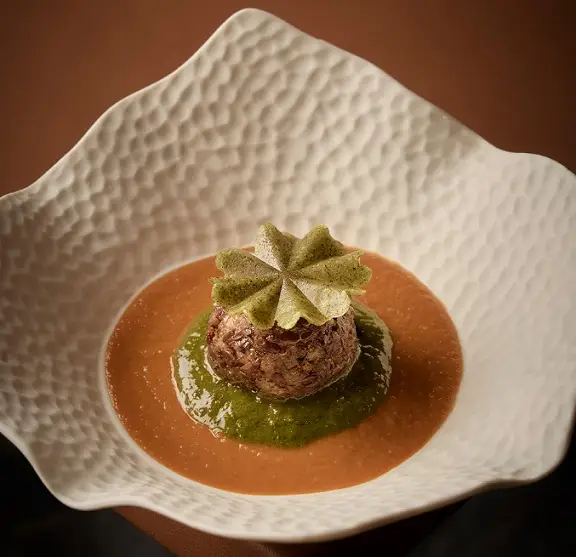
Image Credit: Siam Kempinski Hotel Bangkok
Sra Bua showcases approximately 30 heritage Thai rice varieties, with three selected and served each day. The rotation allows diners to discover differences in texture, aroma and flavor while drawing attention to Thailand’s remarkable rice-growing heritage.
Chef Num’s longstanding fascination with fermentation is also represented through a dedicated Fermentation Library.
Fermentation contributes acidity, savories, aroma and complexity while connecting contemporary cooking with preservation practices that have existed in Thai communities for generations.
Together, the heritage rice, fermentation programme and seasonal ingredients reinforce the restaurant’s focus on provenance and culinary heritage.
Menus are expected to change approximately every four months, allowing Thailand’s seasons to influence what is available and giving repeat diners opportunities to encounter new ingredients.
Chef Num Begins His Bangkok Chapter
Taking charge of Sra Bua represents a significant move for Chef Num, who for years resisted relocating to Bangkok while operating Samuay & Sons and Mah Noi Food Lab in Udon Thani.
Family considerations eventually influenced his decision to establish a stronger presence in the capital, although he expects to continue dividing his time between Bangkok and Udon Thani.
Despite the restaurant now carrying his name, Chef Num has emphasized his respect for Sra Bua’s established reputation. His objective is not to erase its past but to bring his knowledge into an existing house while giving ingredients from different regions of Thailand opportunities to shine.
Prices, Pairings and Reservations
The Signature Biodiversity Journey and Plants & Roots Forward Journey are each priced at THB 4,900++ per person.
A Wine Pairing costs THB 3,900++, while the Zero Proof Pairing is THB 1,900++. The alcohol-free pairing takes inspiration from Thailand’s agricultural landscape and has been developed as part of the overall dining experience.
Sra Bua by Num Weerawat is located at Siam Kempinski Hotel Bangkok and opens from 6:00 PM onwards.
Reservations and enquiries can be made by calling 02-162-9000 or emailing srabua.siambangkok@kempinski.com.
Thai Biodiversity Leads Sra Bua into a New Era
Sra Bua by Num Weerawat now enters a distinctly different chapter, with Thailand’s biodiversity providing the foundation for both its food and identity. Instead of depending on imported luxury ingredients, Chef Num gives prominence to river prawns, lotus, citrus fruits, vegetables, grains, fermented produce and heritage rice, celebrating their origins as much as their flavors.
For Siam Kempinski Hotel Bangkok, the transformation gives Sra Bua a clear point of difference within Bangkok’s competitive fine-dining landscape. For diners, the two tasting journeys provide an opportunity to discover Thailand through ingredients shaped by its seasons, ecosystems and producers, while Chef Num gains a prominent Bangkok platform for a culinary philosophy he has spent years developing.
For more details, visit:
https://www.kempinski.com/en/siam-hotel