


Bangkok Hotel News: Bangkok’s hospitality sector is facing growing turbulence as hotels across the Thai capital struggle with falling occupancy rates while revenues from food and beverage outlets and meeting room operations continue to decline. Average occupancy rates are hovering between 45 to 58 percent for most hotels across Bangkok with some unfortunate ones facing even as low as 30 to 35 percent occupancy rates.
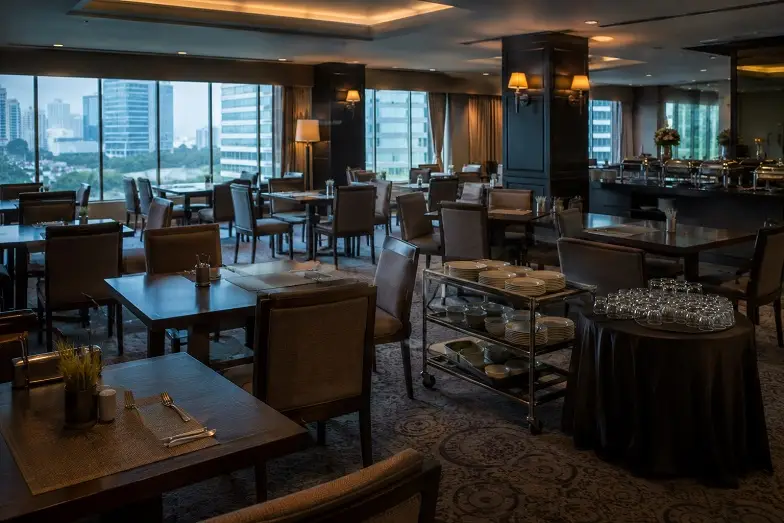
Image Credit: Bangkok Hotel News
Hotel owners, general managers, restaurant managers, and tourism analysts are increasingly warning that the nature of tourism entering Thailand has changed significantly, creating major financial pressure on hotels that once depended heavily on international tourists, corporate events, and local entertainment spending.
Across major commercial and tourism districts including Sukhumvit, Silom, Sathorn, Pratunam, Ratchada, and riverside areas, numerous hotels are quietly dealing with weaker booking activity, softer walk-in business, and declining guest spending. Several mid-range and upscale properties are reportedly lowering room rates and introducing promotional campaigns simply to maintain occupancy levels. However, many operators say discounted rooms are no longer translating into strong in-house spending. In the middle of mounting concerns surrounding Bangkok’s hospitality industry, this Bangkok Hotel News report examines how changing tourist behavior and declining local business spending are now seriously impacting hotel profitability across the city.
Changing Tourist Profiles Affecting Hotel Revenues
While Thailand continues to welcome millions of foreign arrivals annually, hotel executives say the quality of tourism revenue has weakened considerably compared to pre-pandemic years. Many travelers entering Bangkok today are spending far less money on accommodation, dining, nightlife, and entertainment.
A growing number of tourists are choosing Airbnb properties, budget hostels, and short-term condominium rentals instead of traditional hotels. Cheap condo rentals have become increasingly attractive because they offer kitchens, lower daily rates, and flexibility for longer stays.
Hospitality insiders also claim that some foreigners arriving in Thailand are not necessarily conventional tourists but individuals seeking temporary work opportunities, remote online jobs, or low-cost living arrangements. Many are attempting to stretch their budgets while remaining in Thailand for extended periods.
As a result, hotels are seeing fewer guests using hotel restaurants, bars, room service, spa facilities, and premium amenities. Instead, many travelers are eating at inexpensive street food outlets, convenience stores, local food courts, and low-cost eateries outside hotel premises.
Several hotel managers say guest spending patterns have changed dramatically over the last two years, with many visitors now prioritizing affordability over comfort or luxury experiences.
Food and Beverage Operations Facing Significant Pressure
Food and beverage departments, once considered major revenue generators for Bangkok hotels, are now facing serious operational challenges.
Hotel restaurants that previously attracted strong customer volumes for buffets, business lunches, family gatherings, and evening dining are reportedly experiencing noticeable declines in traffic. Managers say even guests staying within hotels frequently choose to dine elsewhere in order to save money.
To combat slowing business, many hotels have launched aggressive promotional campaigns including discounted buffets, happy hour deals, buy-one-get-one offers, and low-cost set menus. Despite these efforts, operators say profit margins continue shrinking while customer spending remains weak.
The decline is not only linked to foreign tourists. Local Thai consumers and businesses are also reportedly cutting back on entertainment spending due to rising household debt, economic uncertainty, and higher living costs.
Hotel banquet divisions are experiencing weaker demand for weddings, private celebrations, business entertainment, and social functions. Several operators say alcohol sales and catering revenues have also fallen compared to previous years.
Many hotel executives warn that declining food and beverage income is becoming particularly dangerous because restaurants and banquet operations carry high fixed costs involving staffing, utilities, imported ingredients, kitchen maintenance, and service operations.
Meeting Room and Corporate Event Revenues Falling
Meeting room revenues across Bangkok hotels are also under heavy strain as companies reduce spending on seminars, conferences, workshops, and corporate events.
Before the pandemic, business travelers and corporate gatherings represented a major source of stable revenue for many Bangkok hotels. Large conferences, training programs, networking events, government meetings, and product launches regularly filled hotel ballrooms and conference facilities throughout the year.
Today, many businesses are cutting discretionary expenses and scaling back event budgets. Some corporations have shifted toward online meetings and virtual conferences, while others are opting for smaller office-based gatherings instead of expensive hotel venues.
Hotel sales executives say competition for corporate clients has become extremely intense, forcing many hotels to offer substantial discounts, complimentary coffee breaks, upgraded facilities, and promotional meeting packages to secure bookings.
Even established hotels with strong reputations are reportedly seeing reduced booking durations, smaller attendee numbers, and fewer repeat business customers.
Oversupply and Airbnb Competition Adding to Industry Stress
Bangkok’s hotel sector is also battling growing oversupply within the accommodation market.
Over the last decade, hundreds of new hotels, serviced apartments, and mixed-use hospitality developments have entered the market, significantly increasing competition. At the same time, Airbnb operators and private condominium landlords continue offering extremely low rental prices that traditional hotels often struggle to match.
Unlike private condo operators, hotels face substantial staffing costs, tax obligations, licensing requirements, maintenance expenses, and operational overheads.
Some hospitality operators believe stricter enforcement against illegal short-term condo rentals may eventually become necessary to create fairer competition within the accommodation industry.
Others argue that hotels must reinvent their business models entirely by focusing on wellness tourism, personalized guest experiences, premium dining concepts, and lifestyle-driven services that cannot easily be replicated by low-cost rentals.
Difficult Months Ahead for Bangkok Hotels
Industry analysts believe Bangkok will remain one of Asia’s most popular tourism destinations because of its global reputation, nightlife, shopping districts, cultural attractions, and internationally recognized food scene. However, many experts warn that high tourist arrival figures alone are no longer sufficient to guarantee strong financial performance within the hotel industry.
The combination of lower-spending visitors, declining local entertainment budgets, and weaker corporate event demand is creating a challenging operating environment for hotels across the city. Food and beverage revenues, banquet operations, and meeting room bookings are all becoming increasingly unpredictable as consumers and businesses continue tightening their spending habits.
Many hotel operators are now reviewing staffing levels, marketing strategies, operational costs, and long-term investment plans in anticipation of prolonged financial pressure. Unless Bangkok succeeds in attracting higher-spending tourism segments while domestic corporate confidence improves, many hotels may continue facing difficult business conditions throughout the remainder of the year.
For the latest on the hospitality industry in Bangkok, keep on logging to Bangkok Hotel News.