


Bangkok Hotel News: Bangkok’s hotel kitchens were once reliable profit engines, drawing both in-house guests and loyal local diners while supporting room rates and brand positioning. Today, many of those same kitchens are quietly becoming financial sinkholes. Rising food costs, shrinking dining demand, staffing instability, and third-party delivery disruption have turned food and beverage departments into loss leaders that owners increasingly tolerate rather than celebrate.
For decades, hotel restaurants in Bangkok played a dual role. They generated standalone revenue while reinforcing a hotel’s image as a lifestyle destination. Buffets were packed, celebrity chefs drew crowds, and banquet kitchens delivered dependable margins. But the economics have shifted sharply, and this Bangkok Hotel News report highlights how many operators now view kitchens as necessary liabilities rather than growth drivers.
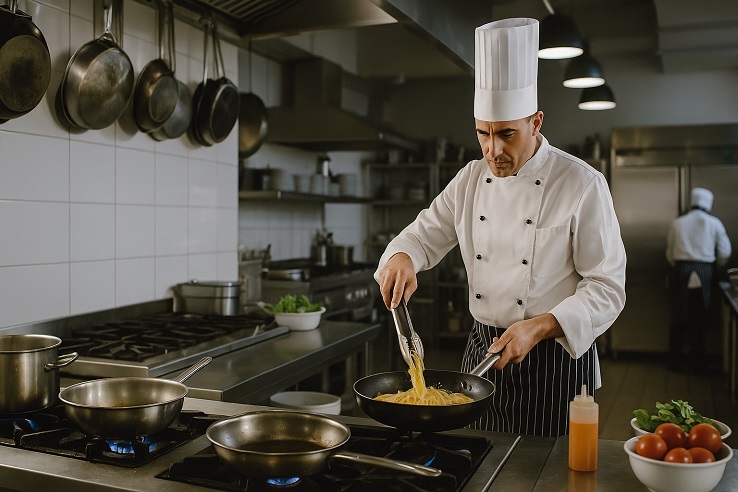
Bangkok hotel kitchens are quietly shifting from profit centers into subsidized brand showcases under mounting financial pressure
Image Credit: AI-Generated
The Inflation Shock Hitting Hotel Kitchens First
Food inflation has hit Bangkok’s hotel kitchens harder than almost any other department. Imported ingredients, premium proteins, dairy, specialty oils, and even basic vegetables now cost significantly more than they did just a few years ago. Unlike standalone restaurants, hotels face pressure to maintain menu pricing that aligns with brand expectations and guest perceptions, limiting their ability to pass on full cost increases. The result is margin compression that quietly eats away at profitability with every service.
Chef Turnover Is Breaking Operational Stability
Staffing has become an even more destabilizing factor. Skilled chefs are harder to retain, with many leaving for independent ventures, overseas roles, or entirely different industries. Frequent leadership changes disrupt menu consistency, purchasing discipline, and kitchen morale. Each new executive chef often arrives with revised concepts, new suppliers, and retraining costs that rarely deliver incremental revenue but almost always increase expenses.
In House Dining Is No Longer a Default Choice
Hotel guests are no longer automatically dining where they sleep. Bangkok’s food scene offers endless alternatives just steps away, and younger travelers are more inclined to explore local eateries or order delivery. Breakfast remains essential, but lunch and dinner covers have declined in many properties. This leaves hotel kitchens running at low utilization for large portions of the day, an inefficiency that drives up per-plate costs.
Delivery Platforms Are Eroding Margins Not Expanding Them
Many hotels embraced delivery apps hoping to replace lost dine-in revenue. Instead, commissions, packaging costs, and price transparency have further eroded margins. Unlike casual restaurants, hotel kitchens carry higher overheads, stricter standards, and complex menus that are poorly suited to delivery economics. What appears as additional revenue on paper often masks losses once all costs are accounted for.
Restaurants Maintained for Image Not Income
A growing number of Bangkok hotels now openly acknowledge that their restaurants exist primarily for branding rather than profitability. Signature dining venues are subsidized to maintain star ratings, attract influencers, and support marketing narratives. Owners quietly accept F&B losses as the price of preserving room rates and international brand alignment, even when restaurant performance would be unacceptable in a standalone operation.
Banquets Are No Longer the Safety Net
Banqueting once offset restaurant losses, but that buffer is thinning. Corporate events are shorter, budgets are tighter, and hybrid meetings reduce food spend. Weddings remain strong but are highly competitive and price sensitive. Kitchens built for volume now struggle to operate efficiently when demand is irregular and unpredictable.
The Hidden Strain on Hotel Financial Models
These pressures are forcing uncomfortable recalculations. Some hotels are downsizing menus, outsourcing certain kitchen functions, or quietly closing outlets during low-demand periods. Others are experimenting with pop-up concepts or rotating guest chefs to reduce long-term commitments. Yet many still hesitate to admit that traditional hotel F&B models no longer align with Bangkok’s dining reality.
Where This Leaves Bangkok Hotels Next
The shift of hotel kitchens into loss leaders signals a broader transformation in how hospitality economics work in Bangkok. Food and beverage is no longer a guaranteed revenue pillar but a strategic tool that must justify its existence beyond profit alone. Hotels that fail to adapt risk allowing emotional attachment and brand vanity to override financial discipline, creating long-term structural weakness that room revenue alone cannot offset.
As Bangkok’s hotel market grows more competitive, owners and operators will be forced to decide whether kitchens remain symbols of prestige or evolve into leaner, smarter operations aligned with how guests actually dine today.
For the latest on the local hotel industry, keep on logging to Bangkok Hotel News.