


Bangkok Hotel News: A Troubling New Breed in Bangkok’s Hotel Scene
Bangkok’s once-flourishing hotel industry, known for its warmth, efficiency, and impeccable service, is now facing a disturbing trend. As the city grapples with fewer tourists due to the global economic slump and reduced Chinese arrivals, a new type of foreign hotel manager—particularly a growing number of young French general managers—seems to be further tarnishing the city’s hospitality reputation. Reports from local hotel partners and consultants suggest that this new breed of executives lacks the professional discipline and dedication that once defined the industry.
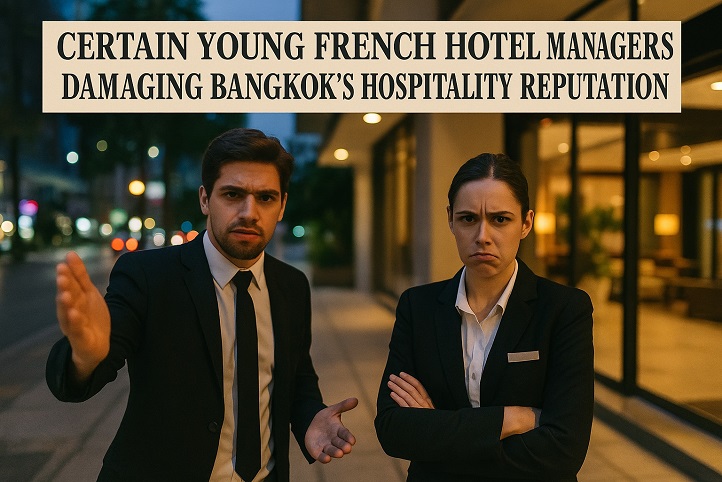
Growing concerns over unprofessional expat managers are threatening Bangkok’s hospitality charm.
Image Credit: AI-Generated
In a recent incident recounted to thisBangkok Hotel News report, a Thai Indian hotel owner of a property located inside a Sukhumvit soi (between Soi 5 to 19, excluding Soi 11) was contacted by a local hospitality consultant proposing ideas to revitalize the property’s food and beverage outlets and meeting facilities. The owner referred the consultant to his general manager—a young French national with prior experience in another Southeast Asian country working for a brand linked to a French chain. Instead of appreciating the outreach during these challenging times, what followed revealed the troubling attitude of this so-called modern European management class.
A Shockingly Unprofessional Attitude
When first contacted, the French general manager curtly responded that he was on vacation and expressed displeasure at being disturbed, even though senior hotel managers are traditionally trained to remain connected to operations regardless of personal leave. It took more than two weeks before he followed up, only to express annoyance again when approached on a Sunday. In an industry where true leaders are known to remain accessible around the clock, such behavior represents a shocking lack of hospitality professionalism.
Hoteliers from previous generations recall that great general managers—whether Thai, European, or American—were trained to treat their hotels as living entities, requiring constant oversight. They answered calls at midnight, handled crises personally, and ensured guest satisfaction above all else. If the industry was facing a slump and the property was not performing that greatly, they would go out of their way irrespective of days of the week to drum up business for their properties. Today, it seems that many of these younger imported GMs view their roles merely as stepping stones for their résumés, bringing arrogance instead of passion.
The Decline of Hospitality Standards
This pattern is not isolated. Several hoteliers in Bangkok and Phuket have quietly voiced frustration about European expatriate managers displaying dismissive attitudes toward both guests and local staff or suppliers. The hotel in question, managed by an American-hospitality brand now majority-owned by a Chinese conglomerate, seems to have lost the genuine hospitality ethos once associated with its brand by having such non-dedicated GMs.
Insiders note that such problems stem from the changing ownership structure in the hotel industry. With multinational hotel management holdings driven by cost efficiency rather than service excellence, the selection of top management has become increasingly careless. Rather than seasoned hoteliers who understand the region and its culture, companies now import inexperienced young Europeans who lack both cultural sensitivity and leadership depth.
Local Owners and Guests Losing Confidence
Thai hotel owners, once eager to hire foreign managers for their expertise, are now beginning to question whether these individuals truly add value. Many guests, too, have noticed a colder, less engaging service environment, far removed from Thailand’s traditional warmth. When guests are greeted by unapproachable or indifferent managers, the entire brand suffers. Local staff morale also declines when they are led by superiors who do not embody the spirit of teamwork or humility that Thai hospitality is known for.
Restoring the Integrity of Thai Hospitality
Industry veterans believe the solution lies in empowering more qualified Thai professionals who understand both international standards and local culture. Thailand’s hotel schools produce capable graduates who can lead with empathy, efficiency, and genuine respect for service. Replacing the current influx of poorly trained European managers with experienced regional talent could help restore trust and revive the heart of Bangkok’s hotel industry.
Ultimately, if Thailand wishes to maintain its position as a global hospitality hub, it must ensure that those entrusted with leadership represent the nation’s values of respect, dedication, and service excellence. The time has come for hotel owners and management groups to prioritize character and competence over passports and accents or skin colour. Only then can Bangkok reclaim its reputation as the true capital of world hospitality.
For the latest on Hotel GMs in Bangkok, keep on logging to Bangkok Hotel News.