


Hotel News: End of an Era for a Hospitality Icon
Hotel Miramar Singapore, a long-standing landmark along Havelock Road, will officially cease operations at the end of October, resulting in the retrenchment of 108 employees. The decision, announced on August 29 in a joint statement with the Food, Drinks and Allied Workers Union (FDAWU), marks the end of more than five decades of service in the city’s hospitality industry. According to both the hotel and the union, the closure was the outcome of a “careful and comprehensive evaluation of the hotel’s long-term business outlook.” This Hotel News report highlights the story behind the closure and the measures taken to ensure fair treatment of employees.
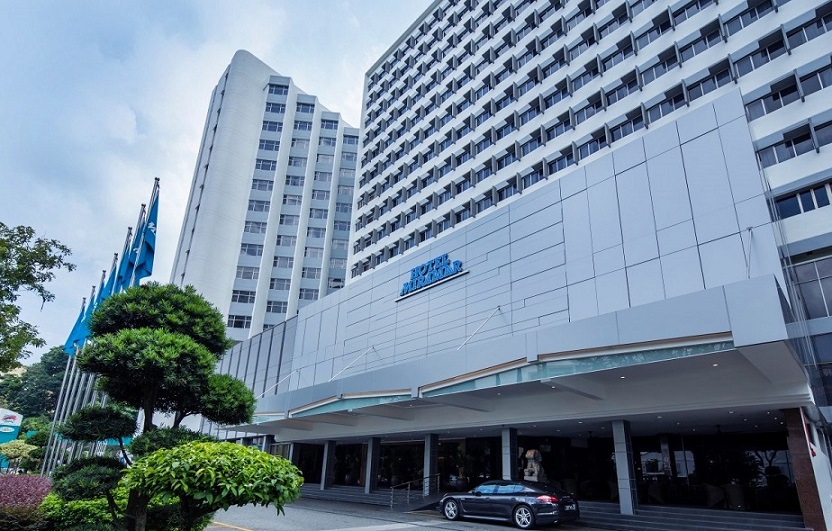
The 344 Room Hotel Miramar in Singapore Closes Suddenly
Image Credit: Hotel Miramar
Employee Support and Retrenchment Packages
In preparation for its closure, Hotel Miramar engaged early with the union to negotiate employee support. The hotel has committed to providing fair retrenchment packages aligned with unionised norms, while also going beyond the basic collective agreement. Long-serving staff will receive additional payouts as recognition of their years of loyalty, and even employees with less than two years of service will be granted ex-gratia payments. Staff under the re-employment scheme are also included in the retrenchment package, ensuring no one is left behind.
To further aid the affected workers, the union is connecting employees to NTUC’s Employment and Employability Institute (e2i), where Singaporeans and permanent residents can access job matching services, career coaching, and skills upgrading programs. During recent employee briefing sessions, NTUC’s e2i was present to provide guidance and one-on-one coaching to help workers transition smoothly into new roles.
A Tribute to Dedicated Employees
Managing director Ken Lim expressed heartfelt gratitude to the hotel’s staff, many of whom dedicated decades of their lives to the property, with some serving for over 55 years. He described these employees as the “backbone” of Hotel Miramar Singapore, highlighting their loyalty and commitment as central to the hotel’s legacy. Both management and FDAWU emphasised that while the closure is unfortunate, the spirit of partnership between labour and management has helped ensure that employee welfare remains a top priority during this challenging period.
Historical Significance of Hotel Miramar
First established in 1968 and partially opened in 1971, the 344-room Hotel Miramar was one of several properties that emerged during Singapore’s hospitality boom of the late 1960s and early 1970s. For decades, it provided not only accommodation but also employment opportunities for generations of Singaporeans. FDAWU described the property as one of the nation’s “hospitality icons” and expressed sadness over its closure, while acknowledging the management’s efforts to support employees right until the end.
Property Sale and Business Outlook
Reports earlier this year revealed that negotiations for the sale of the hotel were already at an advanced stage, with the expected deal likely to be below S$200 million. The property sits on leasehold land with a remaining tenure of just over 41 years, which may have contributed to the decision to wind down operations. Ownership of the hotel remains with a private company linked to families in Singapore and Indonesia, with Lim Tjhun Seng identified as the largest shareholder.
The Closing Chapter
Hotel Miramar’s story is not just about a building but about the countless employees who helped define its character and reputation over the decades. Its closure highlights the ongoing challenges faced by older hospitality properties in adapting to modern market dynamics, while also underscoring the importance of strong union partnerships in ensuring worker welfare. As Singapore’s hospitality landscape continues to evolve, Hotel Miramar will be remembered as a symbol of loyalty, service, and resilience.
In the current climate of economic uncertainty, the example set by the Hotel Miramar management and FDAWU demonstrates that even during difficult transitions, fairness, empathy, and responsibility can guide the process with dignity.
For the on hotels closing in the Asia-Pacific region, keep on logging to Bangkok Hotel News.