


Hotel News: Business Travel Sentiment Turns Sour
The once-robust pipeline of international business travel into the United States is showing signs of sharp contraction, as overseas companies grow increasingly hesitant to send employees stateside. According to new data from the Global Business Travel Association (GBTA), pessimism is deepening among travel buyers worldwide, a trend that could spell serious trouble for U.S. hotel operators who depend heavily on corporate travel revenue streams.
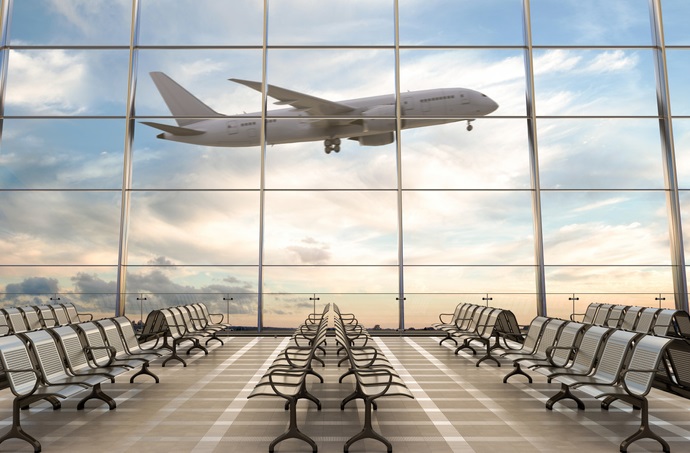
Many international travelers are now avoiding the United States
Image Credit: StockShots
From April through July, GBTA’s survey of more than 950 global travel professionals—including buyers, suppliers, and stakeholders across six continents—revealed growing concern over safety, political uncertainty, and mounting operational costs. This Hotel News report found that worries over detentions at U.S. borders rose by 9 percentage points to 31%. Meanwhile, the share of travel buyers citing budget pressures rose to 44%, and 41% expressed growing concern over the declining willingness of non-U.S. staff to travel to the United States.
Hotels Brace for Major Revenue Shortfalls
Much of the blame for this downturn is being attributed to recent U.S. government policies and geopolitical posturing. Entry restrictions, trade tariffs, and unpredictable foreign relations are all cited as reasons why global organizations are reconsidering their relationships with American travel suppliers.
According to GBTA, this shift is driving global firms to reassess not only their travel budgets but also where they hold meetings and with whom they do business.
One in five global buyers surveyed reported canceling attendance at U.S.-based events—a dramatic jump from just 10% in April. Additionally, 24% said they had shifted meetings or conferences to virtual formats, up from 19% earlier in the year. Perhaps most troubling for U.S. hoteliers is the finding that 18% of business travelers from abroad have outright refused U.S.-bound trips due to policy-related fears or complications.
Even worse, a growing number of companies are simply moving their meetings elsewhere. The GBTA found that an increasing number of firms have either canceled or relocated events outside of the United States altogether. As many as 35% of non-U.S. professionals said their companies are actively seeking new trade partners outside of the country, hinting at a broader, longer-term disengagement.
Hotel Industry Recalibrates for 2025 and Beyond
For American hotel chains—particularly those in major business hubs like New York, Chicago, and San Francisco—these cancellations translate into real losses. Some 58% of lodging suppliers now expect a dip in business-related revenues in the year ahead. That figure was 48% in April, and only 37% earlier in the year, suggesting that the negative sentiment is accelerating.
The economic domino effect could be severe. Last month, both CoStar and Tourism Economics downgraded their 2025 and 2026 projections for RevPAR (revenue per available room), a key performance indicator for hotel health. The World Travel & Tourism Council also delivered a sobering forecast: the U.S. could lose up to $12.5 billion in international visitor spending next year if current trends persist.
Looking Ahead with Growing Uncertainty
The mounting unease among international business travelers poses a growing threat to the U.S. hospitality sector, with ripple effects that may be felt well into 2026. If global firms continue to shift meetings to neutral locations or adopt digital conferencing in lieu of travel, the impact could be structural—not just cyclical. Hotel executives will need to rethink their value propositions and invest in risk mitigation strategies, including diversifying their customer base and enhancing their appeal to domestic travelers. Without swift strategic shifts, America’s hotel sector could face one of its steepest business travel downturns in recent memory.
For the latest on the US hotel industry, keep on logging to Bangkok Hotel News.