


Bangkok Hotel News: In an era where guests are scrutinizing hotels not only for their service but also for their sustainability, a growing number of properties in Thailand are going beyond cosmetic greenwashing and actively working to obtain LEED certification. LEED, or Leadership in Energy and Environmental Design, has become one of the world’s most rigorous and recognized green building certification systems, administered by the U.S. Green Building Council (USGBC). From construction methods to operations, energy use, materials, and even landscaping, LEED certification involves a deeply detailed third-party verification process that evaluates a building’s environmental performance from top to bottom.
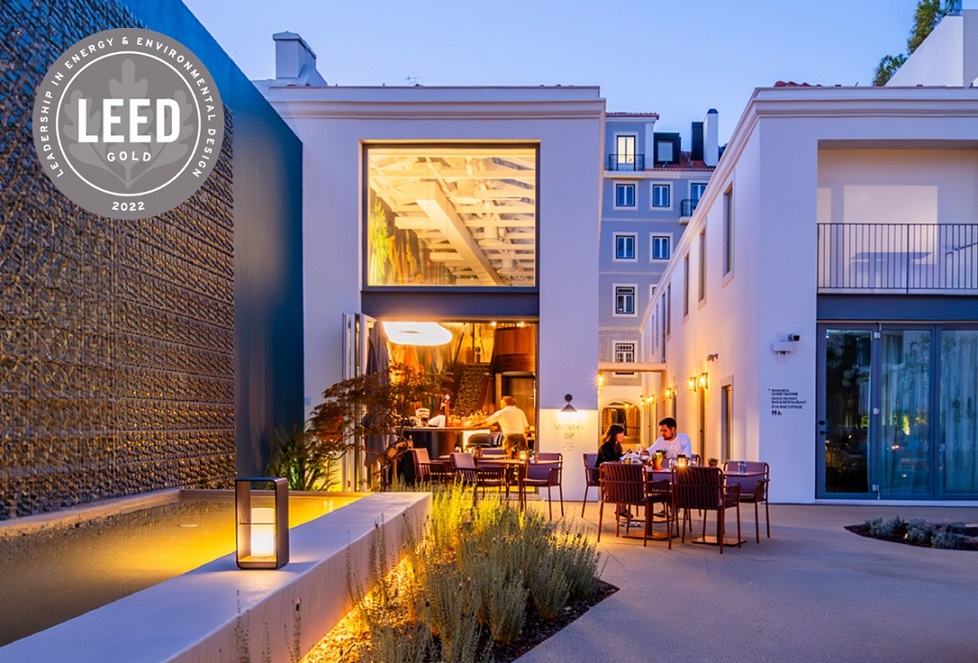
Hotels with LEED Certification are enjoying higher bookings from markets like North America and Europe.
Image Credit: Hilton Hotels
More than just a buzzword or branding label, LEED accreditation comes with real structural and operational requirements. This Bangkok Hotel News report delves into why hotels in Thailand especially in Bangkok and Phuket, are increasingly seeking this certification, how they can go about achieving it, and what the long-term payoffs may be—both for their bottom lines and for the planet.
What LEED Actually Measures
It’s important to understand that sustainability efforts like recycling programs, solar panels, or eco-friendly toiletries—while commendable—don’t automatically translate into LEED recognition. LEED-certified buildings are scored across a wide array of metrics, including energy efficiency, water use, construction waste management, use of sustainable materials, and the indoor environmental quality experienced by guests and employees alike. Based on performance, a hotel can earn a certification level ranging from basic LEED to Silver, Gold, or Platinum, with Platinum being the most difficult to achieve.
“LEED certification proves our sustainability efforts are more than symbolic,” said Erika Lim, general manager of the Elara Luxe Hotel in Chiang Mai, which recently earned LEED Gold status. “We went through a stringent evaluation process to ensure every aspect of our design and operation met global environmental standards.”
A Booming Trend Among Hospitality Brands
The hospitality industry’s embrace of LEED is more than a fleeting trend. According to the USGBC, as of March 2025, there were over 4,100 LEED-certified or registered hotel projects worldwide. Leading luxury brands are increasingly adopting this standard as a baseline requirement. For instance, the Majestic Palms Hotel Group recently mandated that all new developments must meet at least LEED Gold certification.
“We’re seeing a sea change in guest expectations,” explained Ricardo Medina, sustainability director at the Emerald Bay Conference Resort in Koh Samui. “Modern travelers—especially in the high-end segment—are highly eco-conscious. They look for authenticity and proof of sustainable practices, which LEED provides in a transparent way.”
This perspective is echoed by Julianne Park, general manager at the Halcyon Hills Hotel in Phuket, which earned LEED Silver last year. “LEED helped us articulate our commitment to environmental stewardship in a way that guests immediately recognize and trust,” she said.
Thailand’s Climate Adds Unique Challenges and Opportunities
Hotels in Thailand face distinct challenges due to the country’s tropical climate, but also enjoy unique opportunities for innovation. LEED consultants working in the region recommend strategies such as optimized building orientation to reduce solar gain, natural ventilation systems, rainwater harvesting, and native landscaping that eliminates the need for excessive irrigation.
“Every LEED point we chased had to be contextually adapted to the Thai environment,” said Suriya Techatana, chief project architect at the Lotus Sands Resort in Krabi. “We leaned heavily on local sourcing, used high-efficiency cooling systems, and incorporated smart irrigation controls based on weather data. It was complex—but absolutely worth it.”
The Certification Process Step by Step
Achieving LEED certification isn’t an overnight process. For hotel developers and owners in Thailand, it requires strategic planning and a dedicated team.
-Understanding the LEED Framework: Begin by choosing the appropriate LEED rating system. For new constructions, BD+C (Building Design and Construction) is usually recommended. For operational hotels, O+M (Operations and Maintenance) may be more suitable.
-Hiring a LEED Consultant: An experienced LEED consultant is essential. They help with everything from energy modeling and sustainable material selection to documentation and compliance strategy.
-Sustainability Strategy Development: The hotel’s leadership works alongside the consultant to identify which LEED points are realistically attainable and align with the brand’s ethos.
-Design and Construction Integration: Sustainable practices should be woven into every layer of design and construction—HVAC systems, insulation, materials, water fixtures, and lighting systems all play critical roles.
-Documentation and Submission: Comprehensive documentation is submitted via LEED Online. This includes proof of materials used, energy savings projections, and strategies implemented to improve indoor air quality and resource efficiency.
-Third-Party Verification: The Green Business Certification Institute (GBCI) reviews the submission, conducts site inspections, and issues the final LEED scorecard.
-Certification Awarded: Based on accumulated points, the property receives one of the four LEED ratings—Certified, Silver, Gold, or Platinum.
Real-World Case Study from Thailand
At the Elara Luxe Hotel in Chiang Mai, the project’s sustainability vision began on day one. According to Lim, over 80 percent of the hotel’s construction waste was recycled. Locally sourced teak, bamboo, and volcanic stone were used throughout. Its HVAC systems rely on next-generation refrigerants and feature recycled fresh air flow, reducing carbon emissions while improving indoor air quality.
The hotel’s rooftop features an eco-garden planted with low-water native species, reducing both the heat island effect and the irrigation demand. Smart water meters and weather-responsive irrigation controls cut water usage by nearly 40 percent. Motion-controlled LED lighting and energy monitoring systems help ensure energy usage remains efficient.
Building from the Ground Up vs. Retrofitting
Industry insiders agree that building sustainably from scratch is far easier than retrofitting an existing property. Retrofitting can be expensive—especially when it involves replacing inefficient HVAC systems or updating plumbing and insulation.
However, that hasn’t stopped pioneers like the team behind the Orchid Crest Heritage Hotel in Bangkok. Built in the early 1970s, this historic hotel is undergoing a green transformation. “We knew it would be tough, but heritage buildings deserve to be part of the future,” said general manager Benyapa Phumee. “We’re using high-performance glass, solar-assisted heating systems, and we’ve reduced our lighting load by 50 percent. It’s already showing savings.”
Quantifying the Return on Investment
While some skeptics point to the costs of certification, hotel executives argue the return on investment justifies the expenditure.
“Our energy costs have dropped dramatically—nearly 60 percent less per room night than comparable properties,” said Rodriguez Peña, GM at the LEED Platinum–certified Coral Pavilion Hotel in Hua Hin. “That’s a figure even the accountants are excited about.”
Medina of the Emerald Bay Resort added, “We get more RFPs from corporate clients who now require sustainability as part of their selection criteria. LEED isn’t just a green halo—it’s become a market differentiator.”
A report from the USGBC supports this: green buildings use 26 percent less energy, emit 33 percent less CO₂, and use 30 percent less indoor water. They also divert up to 75 percent of construction waste from landfills.
Key Advice for Aspiring LEED Hoteliers
LEED certification requires meticulous planning and tracking. “The data component can’t be underestimated,” said Park from the Halcyon Hills Hotel. “If you’re not documenting from the start, you’ll end up playing catch-up.”
Another tip: focus on your hotel’s strongest sustainability angle. Whether it’s waste management, energy savings, or water conservation, leaning into your strengths can be the smartest approach.
And above all, culture matters. “Make sustainability part of your team’s mindset,” said Lim. “When everyone is aligned, everything becomes easier.”
A Commitment That Extends Beyond the Building
Hotels that achieve LEED certification aren’t just celebrating a plaque on the wall—they are making a tangible, long-lasting commitment to a more sustainable hospitality industry. The process may be intensive, the costs upfront may seem steep, but the long-term advantages—lower operating expenses, better guest loyalty, enhanced brand perception, and a reduced carbon footprint—are undeniable.
More importantly, it represents a cultural shift in hospitality. It signals that a hotel is not merely reacting to environmental pressures but leading the charge toward a smarter, more responsible future. As more guests prioritize values-based travel, hotels that can demonstrate transparent, independently verified sustainability efforts are likely to see not just better margins—but stronger guest relationships built on trust.
Ultimately, for hotels in Thailand and across the globe, LEED certification is not just about meeting standards; it’s about rising to them. In an age of climate urgency and conscious consumption, it’s a powerful way for hotels to take the lead—one green building block at a time.
For more about LEED certification, check out:
For the latest on LEED certification, keep on logging to Bangkok Hotel News.