


Hotel News: Massive Enforcement Sweep Targets Short-term Rental Offenders
Singapore is sending a strong message to rogue operators of illegal short-term rentals. In a sweeping legal move, the Urban Redevelopment Authority (URA) has charged four companies and two individuals with a staggering 340 counts of illegally providing unauthorized short-term accommodation in private residential properties. The charged firms allegedly operated out of 170 residential units across 50 developments island-wide, in clear violation of the city-state’s Planning Act. Such practices are hurting the local industry and the local authorities are planning more stringent checks and extensive surveillance of online sites promoting or offering short-term at non-hotel properties.
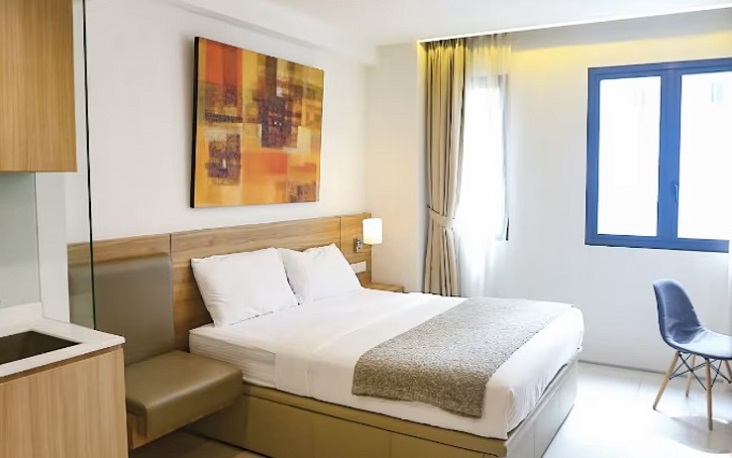
A studio unit for rent at ST Residences Balestier, managed by ST Hospitality
Image Credit: Taken from ST Hospitality website
According to this Hotel News report, the accused face heavy legal consequences, with each charge carrying a maximum penalty of S$200,000 (approximately US$157,379). Singapore law mandates that private homes must be rented out for a minimum of three consecutive months, a regulation designed to preserve the residential nature of neighborhoods and to avoid the disruptive churn associated with transient occupants.
Details of the Offending Parties and Their Operations
The crackdown involves two separate court cases. In the first, heard on July 1, 2025, three companies—MR Singapore Pte Ltd, Metro Relocations Pte Ltd, and Cleaning Centre Pte Ltd (formerly Metro Relocations (Robin) Pte Ltd)—were collectively slapped with 90 charges. Their director, James Chua Yun Da, also known as James Chua Jr., was personally handed an additional 90 charges. These infractions were allegedly committed across 90 residential units located in 22 private developments throughout Singapore.
In the second case, which was heard earlier on June 17, 2025, ST Hospitality Pte Ltd and its former Chief Operating Officer, Joshua Goh Keng Hong, were each charged with 80 counts of similar offences. These alleged activities took place in 80 units across 28 private developments, adding to the growing number of infractions URA has been actively pursuing in recent years.
ST Hospitality, a wholly owned subsidiary of the publicly listed Katrina Group, operates several co-living hotels and serviced apartments across Singapore, including locations in Bugis, Chinatown, Jalan Besar, and Balestier. The group is also known for its food and beverage brands such as Bali Thai and So Pho, making its involvement in these legal proceedings particularly notable within the hospitality sector.
Singapore’s Firm Stand on Illegal Rentals
The URA has made it clear that it views illegal short-term rentals as a serious breach of urban planning regulations. Officials emphasized that the frequent turnover of guests, typical in short-term rentals, threatens the stability and character of residential communities, potentially creating safety issues and conflicts with long-term residents.
The Planning Act explicitly prohibits such practices in private residential properties, and URA has vowed to continue its investigations and enforcement operations. Since 2019, at least 71 offenders have already been fined, and 15 prosecuted, as part of the government’s broader efforts to regulate the growing demand for alternative accommodations such as those listed on platforms like Airbnb.
In March 2025, another firm—International Service Apartments—was also charged alongside its executives for similar offences, adding to a growing list of service providers under scrutiny. These developments suggest a coordinated and sustained clampdown that is likely to continue.
Public Role and Growing Vigilance
URA has also encouraged members of the public to remain vigilant and report suspected cases of illegal short-term rentals through its online feedback portal. Officials assured the public that all submitted information will be treated with strict confidentiality, reinforcing the agency’s community-based approach to upholding housing regulations.
The hospitality industry in Singapore is under increasing pressure to maintain compliance as the government tightens its grip on unregulated stays. As housing costs rise and tourists seek cheaper alternatives, authorities are clearly unwilling to let private residential spaces morph into unlicensed hotels.
These recent prosecutions mark a significant turning point in Singapore’s enforcement strategy and serve as a warning to other operators considering similar activities. With potentially millions of dollars in fines looming over the accused companies and individuals, the financial and reputational costs of bypassing the law have never been clearer.
This intensified crackdown reflects Singapore’s broader effort to preserve the integrity of its residential zones, ensuring that neighborhoods remain safe, peaceful, and suitable for long-term residents. The authorities’ message is unequivocal—there is no room for illegal short-term operators in Singapore’s residential real estate landscape.
For the latest on illegal short-term rentals in Asia, keep on logging to Bangkok Hotel News.